
国庆期间,在湖北人形机器人创新中心指导下,宜昌大数据集团联合湖北省大树智能科技公司打造的宜昌首家人形机器人“7S”店,在三峡(宜昌)大数据产业园正式试营业。这标志着宜昌大数据集团在具身智能产业布局上迈出关键一步,也为全市数字产业生态再添新载体。
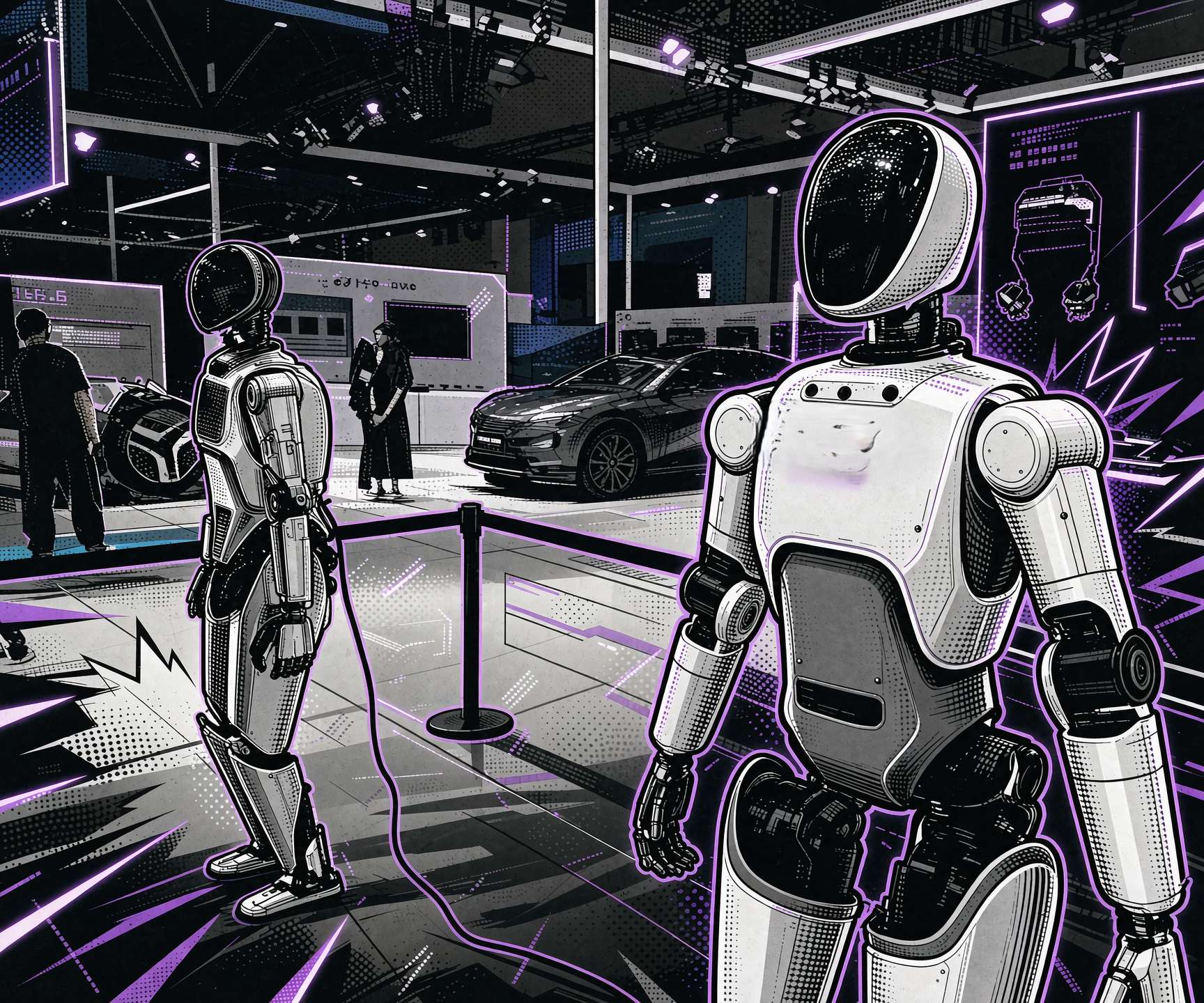
During the National Day holiday, under the guidance of the Hubei Humanoid Robot Innovation Center, the first humanoid robot "7S" store in Yichang—built jointly by Yichang Big Data Group and Hubei Dashu Intelligent Technology—officially began trial operation at the Three Gorges (Yichang) Big Data Industrial Park. This marks a key step for Yichang Big Data Group in its embodied intelligence industrial layout and adds a new carrier to the city's digital industry ecosystem.
所谓“7S”店,不是传统意义的产品展厅。它把整机销售(Sale)、配件供应(Spare parts)、运维服务(Service)、信息反馈(Survey)、场景方案(Solution)、成果展示(Show)、技能培训(School)七大功能集于一店,覆盖售前到售后的全链条服务,试图做成“能看、能玩、能学、可购买”的沉浸式科技体验空间。这个命名方式借的是汽车4S店的话术,但加的这三项——场景方案、成果展示、技能培训——透露的是另一个逻辑:人形机器人现在卖出去之后,客户不知道怎么用、坏了不知道怎么修、员工不会操作,这三件事不解决,整机销售本身也走不远。
The so-called "7S" store is not a traditional product showroom. It bundles seven functions into one location: whole-machine sales (Sale), spare parts supply (Spare parts), operation and maintenance service (Service), information feedback (Survey), scenario solutions (Solution), achievement display (Show), and skills training (School)—covering the full chain from pre-sale to after-sale, attempting to create an immersive tech experience space that is "visible, playable, learnable, and purchasable." The naming borrows from the automobile 4S store vocabulary, but the three added items—scenario solutions, achievement display, and skills training—reveal a different logic: after a humanoid robot is sold, customers do not know how to use it, do not know how to repair it when it breaks, and employees do not know how to operate it. Unless these three things are solved, whole-machine sales itself will not go far.
现场的人形机器人和四足机器人同台亮相,这是7S店里最直观的一层。人形机器人负责展示双足行走、抓取、交互这些能力,四足机器人负责展示运动能力和复杂地形适应。两类产品放在同一个空间里卖,背后是供应链和客户群的现实:目前真正在掏钱买机器人的,不少是园区、景区、展馆、巡检场景,这些场景对形态的要求没那么苛刻,四足能干的活不一定需要人形。7S店把两种形态摆在一起,等于承认了现阶段客户买的是“机器人”这个品类,而不是非要“人形”这个形态。
Humanoid robots and quadruped robots appear together on site—the most intuitive layer of the 7S store. Humanoid robots demonstrate bipedal walking, grasping, and interaction. Quadruped robots demonstrate locomotion and adaptation to complex terrain. Selling both product types in the same space reflects the reality of supply chains and customer bases: many who are actually paying for robots right now are industrial parks, scenic areas, exhibition halls, and inspection scenarios. These scenarios are not that demanding about form factor—what a quadruped can do does not necessarily require a humanoid. Putting both forms together in a 7S store amounts to acknowledging that at this stage, customers are buying the "robot" category, not insisting on the "humanoid" form.
选址宜昌,而不是武汉,这件事本身值得多看两眼。宜昌大数据集团是地方国企,三峡(宜昌)大数据产业园是它的地盘。把首家人形机器人7S店放进自己的园区,首先解决的是场地成本问题,其次解决的是首批客户问题——园区里的企业、来访的政府考察团、周边景区和工厂,都是潜在买家。湖北人形机器人创新中心提供指导,意味着这不是一家企业单打独斗,背后有省级创新平台的资源对接。这套打法和当年新能源汽车推广时地方国企先建充电桩、先采购一批公交车的逻辑有相似之处:先用地方国资把第一波需求和基础设施撑起来,等供应链成本降下来、产品成熟度提上去,再往市场化方向走。
Choosing Yichang rather than Wuhan deserves a second look. Yichang Big Data Group is a local state-owned enterprise, and the Three Gorges (Yichang) Big Data Industrial Park is its territory. Putting the first humanoid robot 7S store inside its own park first solves the venue cost problem, and second solves the first-batch customer problem—enterprises in the park, visiting government delegations, nearby scenic areas and factories are all potential buyers. Guidance from the Hubei Humanoid Robot Innovation Center means this is not one company going it alone; there is resource matching from a provincial-level innovation platform behind it. This playbook resembles the logic of early new energy vehicle promotion, when local state-owned enterprises first built charging piles and first procured a batch of buses: use local state capital to support the first wave of demand and infrastructure, then move toward marketization once supply chain costs come down and product maturity goes up.
7S店里“技能培训”这一项,放到人形机器人当下的阶段来看,比“整机销售”更值得关注。机器人卖出去只是第一步,客户方的操作人员、维护人员、场景设计人员都需要培训。目前人形机器人行业缺的不只是硬件工程师,还缺大量懂机器人操作、懂场景调试的现场人员。7S店把培训做成一项标准服务,等于在卖机器的同时卖一套“人机协作的入门课”。这件事如果做成规模,可能会催生一个新的职业培训品类,就像当年电脑普及带动了电脑培训班、无人机普及带动了飞手培训一样。
The "skills training" item in the 7S store, placed in the current stage of humanoid robots, deserves more attention than "whole-machine sales." Selling the robot is only the first step. The customer's operators, maintenance staff, and scenario designers all need training. What the humanoid robot industry lacks right now is not just hardware engineers, but also a large number of on-site personnel who understand robot operation and scenario debugging. Making training a standard service means selling an "introductory course to human-robot collaboration" alongside the machine. If this scales, it could spawn a new vocational training category, much like computer普及 drove computer training classes and drone普及 drove pilot training.
从产业侧看,宜昌这家7S店是一个观察窗口。人形机器人整机出货量还在千台到万台之间爬坡,供应链上的零部件企业已经开始扩产,地方国资开始建销售和服务网络,培训体系开始被纳入销售链条。这三件事同时发生,说明这个行业正在从“实验室演示”往“区域落地”过渡。7S店能不能盈利,短期内不重要,重要的是它把售后、培训、场景方案这些环节从整机销售里拆出来,单独做成一门生意。这个拆分动作本身,比店里摆了多少台机器人更有信息量。
From the industry side, this 7S store in Yichang is an observation window. Humanoid robot whole-machine shipments are still climbing between the thousands and tens of thousands. Component suppliers upstream have already started expanding capacity. Local state capital has started building sales and service networks. The training system is being incorporated into the sales chain. These three things happening simultaneously indicate the industry is transitioning from "laboratory demonstration" to "regional deployment." Whether the 7S store can be profitable in the short term is not important. What matters is that it separates after-sales, training, and scenario solutions from whole-machine sales and turns them into a standalone business. This splitting action itself carries more information than how many robots are displayed in the store.