
Hackster News 10月9日介绍了一款桌面机器人,作者是Akashdeep Singh。Hackster的编辑Cameron Coward在文章开头先说了段实话:我们很多人对生产力的执念有点过头了,总想高效利用工作时间,痴迷于优化工作流、消灭空闲时间,这种心态不太健康。人应该允许自己休息、允许自己玩。Singh设计的这台小机器人,就是给大脑放个小假用的,它同时还能当遥控车开。
Hackster News on October 9 introduced a desktop robot designed by Akashdeep Singh. Hackster editor Cameron Coward started the article with some honesty: many of us are a bit too wrapped up in the idea of productivity, always wanting to use work hours efficiently, obsessing over workflows and eliminating idle time—this mindset is unhealthy. People should allow themselves breaks and play. Singh's little robot is for giving your brain a mini vacation, and it doubles as an RC car.
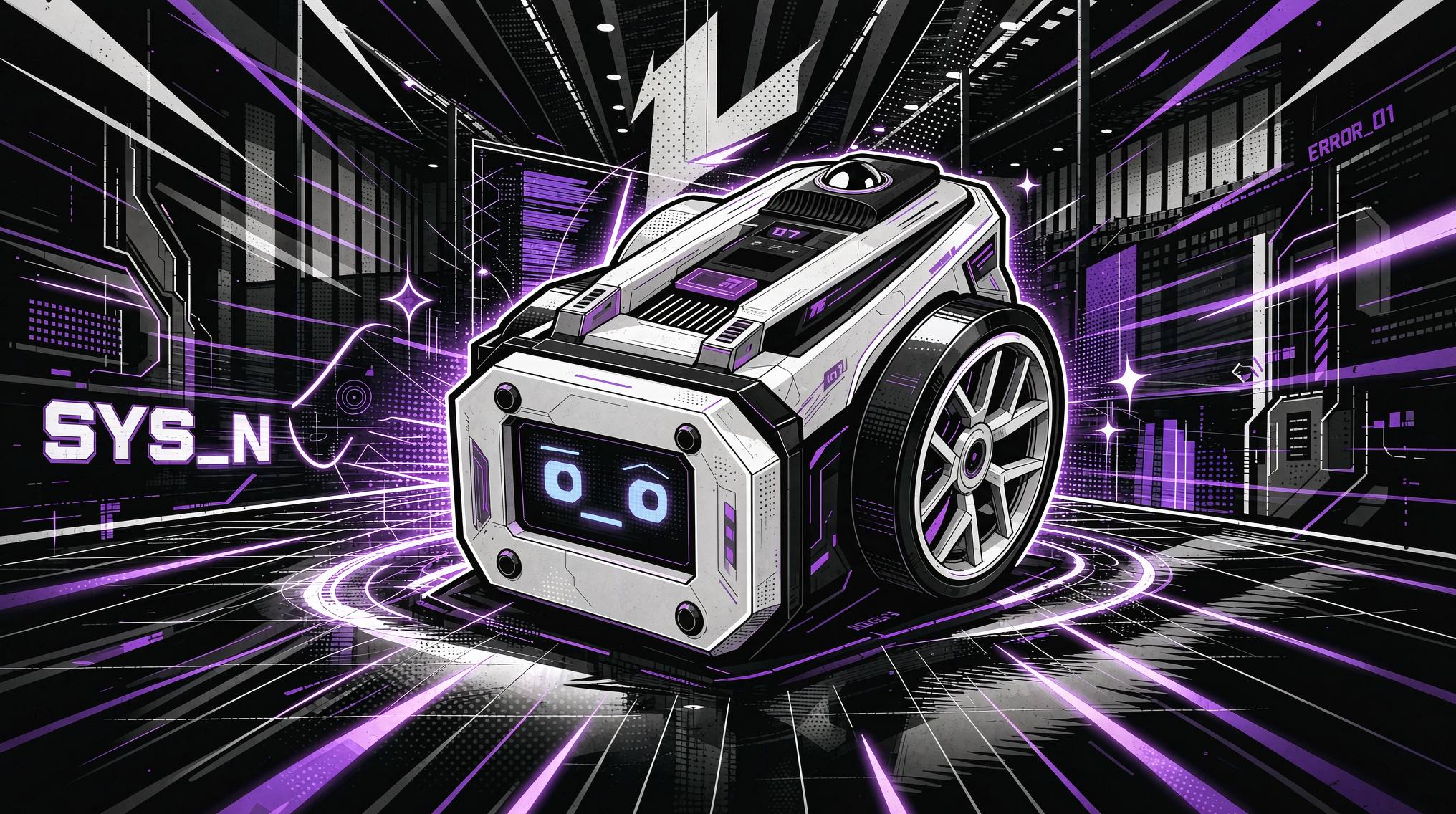
市面上的桌面机器人不少,大多没什么实际用途,就是桌面玩具。但它们的通病是自主运行,这对一个玩具来说有点奇怪。它们通常有些交互功能,比如响应语音指令或者手势,但真玩起来,这些交互并不那么有意思。Singh这台机器人的区别在于,它可以当遥控车开,这就好玩多了。遥控这个动作本身,比对着一个自主运行的小方块喊话要有参与感。
There are plenty of desktop robots out there, mostly without practical purpose—just desk toys. But their common flaw is autonomous operation, which is odd for a toy. They usually have some interactivity, like responding to voice commands or gestures, but when it comes to actual play, that interactivity is not that appealing. Singh's robot differs in that it can be driven as an RC car, which is much more fun. The act of remote controlling something is more engaging than shouting at an autonomously running little cube.
硬件配置方面,机器人的大脑是Seeed Studio XAIO ESP32-C3开发板。面部表情显示在一块1.3英寸OLED屏幕上。供电来自一块小锂电池,驱动靠一对微型N20减速电机。这些部件都装在一个3D打印的框架上,整体紧凑,外观也做得不错。ESP32-C3这颗芯片自带Wi-Fi,这是它能用手机浏览器直接控制的原因。
On hardware, the robot's brain is a Seeed Studio XAIO ESP32-C3 development board. Facial expressions display on a 1.3-inch OLED screen. Power comes from a small lithium battery, and drive comes from a pair of tiny N20 gear motors. These components all attach to a 3D-printable frame that is compact and aesthetically pleasing. The ESP32-C3 chip has built-in Wi-Fi, which is why it can be controlled directly from a phone browser.
操作方式很简单。想开这台机器人,掏出手机,连上ESP32广播的网络,用浏览器打开它自托管的一个网页应用。这个应用里有标准移动控制,前进、后退、旋转,还有一些特殊模式,比如跳舞程序。文章里说,控制的响应速度出乎意料地好,机器人移动也很顺滑,在桌面上开着玩很容易。这个细节值得注意,遥控车好不好玩,很大程度上取决于延迟。如果按了前进键,机器人半秒后才动,玩两下就不想玩了。ESP32-C3加上本地网络直连,把延迟压到了可以接受的范围。
Operation is simple. To drive the robot, take out your phone, connect to the network broadcast by the ESP32, and open its self-hosted web app in a browser. The app has standard movement controls—forward, reverse, rotate—plus some special modes like a dance routine. The article says control responsiveness is surprisingly good and the robot's movement is very smooth, easy to drive around on a desk. This detail matters: whether an RC car is fun depends largely on latency. If you press forward and the robot moves half a second later, you lose interest after two tries. The ESP32-C3 plus direct local network connection pushes latency down to an acceptable range.
想自己造一台的话,Singh把文件和代码放在了他的Cults3D页面上。Cults3D是一个3D打印模型分享平台,这意味着整个项目是开源的,有3D打印机的人可以自己下载、打印、组装。从零件清单来看,ESP32-C3开发板、1.3英寸OLED屏、N20减速电机、小锂电池,这些都是常见的创客元器件,总成本不会很高。组装难度主要在于3D打印件的装配和电路连接,对于有基本电子制作经验的人来说,是个周末能完成的项目。
If you want to build one yourself, Singh has put the files and code on his Cults3D page. Cults3D is a 3D-printed model sharing platform, meaning the entire project is open source—anyone with a 3D printer can download, print, and assemble it. From the parts list, the ESP32-C3 board, 1.3-inch OLED screen, N20 gear motors, and small lithium battery are all common maker components, so total cost will not be high. Assembly difficulty is mainly in fitting the 3D-printed parts and wiring the electronics—a weekend project for someone with basic electronics experience.
Hackster这篇文章结尾有句话,如果你觉得工作日需要多休息几次,就去Singh的Cults3D页面拿文件,造一台自己的机器人。这句话把这款产品的定位说得很清楚:它不是生产力工具,不是AI助手,不是智能家居中枢。它就是一台放在桌上、能在你累了的时候开两圈的小车,顺便有个会变表情的脸。在桌面机器人这个品类里,承认自己是个玩具,可能比硬要装成有用的小助手更诚实,也更好玩。
Hackster's article ends with a line: if you feel like you need more breaks during your workday, head over to Singh's Cults3D page to grab the files and build your own robot. This line makes the product's positioning very clear: it is not a productivity tool, not an AI assistant, not a smart home hub. It is a little car on your desk that you can drive a couple of laps when you are tired, with a face that changes expressions. In the desktop robot category, admitting you are a toy may be more honest and more fun than pretending to be a useful little assistant.