
EET电子工程专辑10月9日刊发Synaptics高级副总裁Satish Ganesan的文章,标题是《缺失的触觉:为何物理AI“能看清却摸不到”》。文章开头举的例子很日常:伸手进口袋,不用看就能找到钥匙。你看不见口袋里的东西,但手指能从硬币和绒毛中分辨出钥匙,感知到它的重量和齿边,最终握住正确的物品。这是触觉在完成视觉根本做不到的工作。AI已经学会了看,学会了听,越来越能推理、计划、对话,但让机器人拿起一个纸杯、一颗葡萄或一张揉皱的收据,幻象就会破灭。它会犹豫,会压碎纸杯或掉落葡萄。大脑变聪明的速度远远快于手。
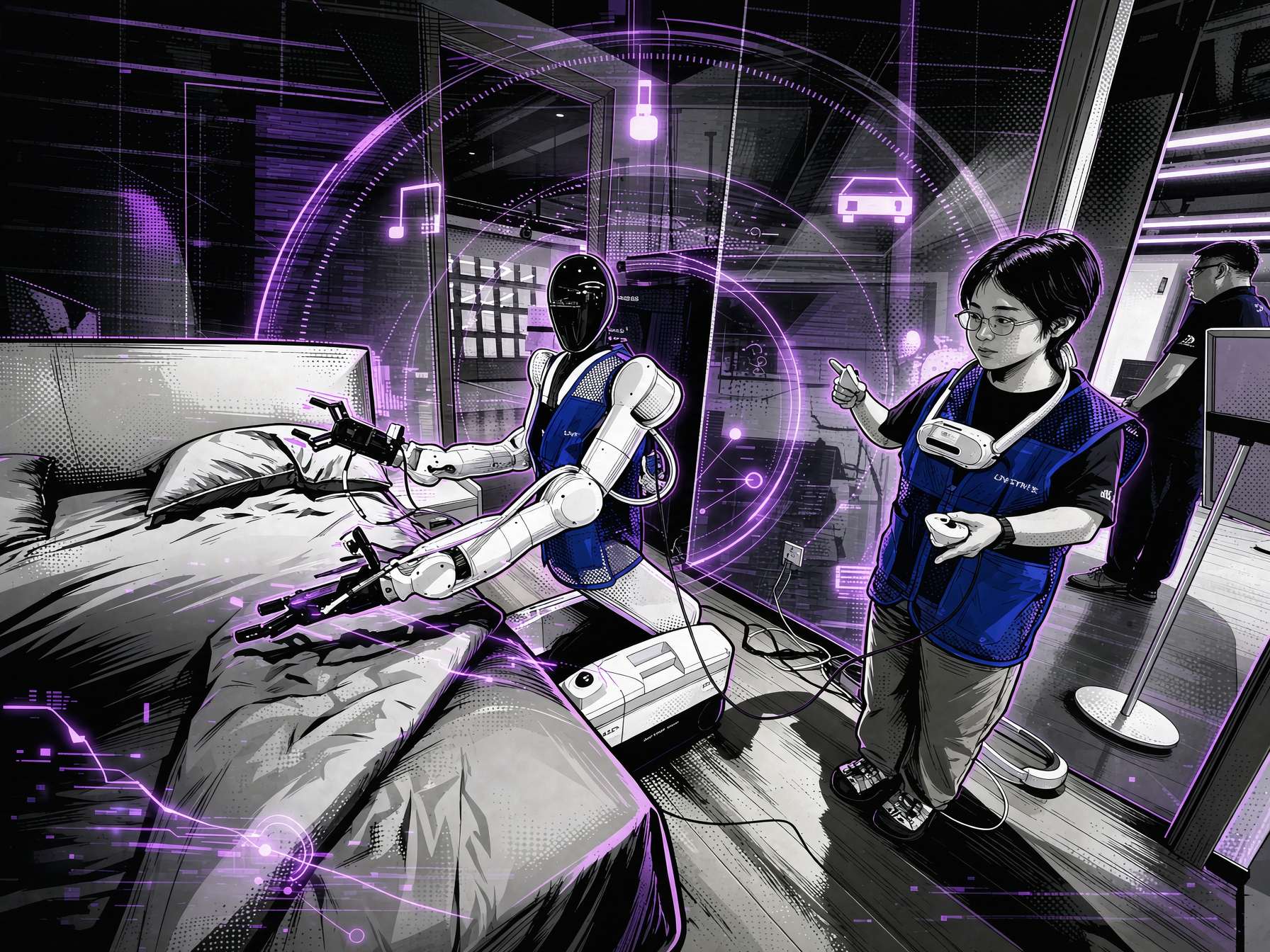
EET China published an article on October 9 by Synaptics Senior Vice President Satish Ganesan, titled "The Missing Sense: Why Physical AI Can See Everything and Feel Nothing." The opening example is mundane: reaching into a pocket and finding keys without looking. You cannot see inside the pocket, but your fingers distinguish the key from coins and lint, perceive its weight and serrated edge, and grip the right object. This is touch doing work vision fundamentally cannot. AI has learned to see, learned to hear, and is increasingly able to reason, plan, converse, and generate solutions. But ask a robot to pick up a paper cup, a grape, or a crumpled receipt, and the illusion breaks. It hesitates. It crushes the cup or drops the grape. The brain is getting smarter much faster than the hand.
这种限制不是因为机器人缺乏智能,而是因为它们缺乏触觉。几十年来,AI主要关注感知,通过图像、语言和声音来理解世界。物理AI系统必须在现实世界中直接运行和互动,这彻底重塑了挑战。智能机器不再仅仅是解读世界,它们必须与世界互动,必须能够抓取、操作、组装、举起、搬运物件,并与人类实现高效安全的协作。因此,制约物理AI的关键已不再是看得见,而是摸得着。
This limitation is not because robots lack intelligence, but because they lack touch. For decades, AI focused mainly on perception—understanding the world through images, language, and sound. Physical AI systems, which must operate and interact directly in the real world, completely reshape the challenge. Intelligent machines no longer merely interpret the world; they must interact with it—grasp, manipulate, assemble, lift, carry objects, and collaborate efficiently and safely with humans. Therefore, the key constraint on physical AI is no longer "can see," but "can touch."
文章对比了两种自主模式:自动驾驶汽车和机器人操作。自动驾驶汽车几乎所有精力都用于避免碰撞,对自动驾驶汽车而言,接触物体通常意味着失败。而机械手的存在恰恰相反,它的任务是主动、持续且智能地进行接触。每一次成功的抓取不仅取决于定位物体,更取决于理解物体在瞬间接触时的反应。这些信息是看不见的,必须靠触觉去感知。研究人员越来越多地用一句话来描述机器人操作:视觉用于规划,触觉用于执行。视觉擅长全局理解,摄像头可以确定物体的位置、估计姿态、对材料进行分类并规划轨迹。但一旦机器人的手指握住物体,视觉就开始失效。接触点会被手本身遮住,摄像头无法观察摩擦力,无法判断纸杯是否略微潮湿,纸箱是否比预期的重,或者玻璃杯是否开始在两指间滑动。
The article contrasts two autonomy models: autonomous vehicles and robotic manipulation. Autonomous vehicles devote almost all effort to avoiding collisions; for them, contact usually means failure. The robotic hand is the opposite—its task is active, continuous, and intelligent contact. Every successful grasp depends not only on locating the object, but on understanding how the object reacts at the moment of contact. This information is invisible and must be sensed through touch. Researchers increasingly describe robotic manipulation in one sentence: vision for planning, touch for execution. Vision excels at global understanding—cameras determine object position, estimate pose, classify materials, and plan trajectories. But once the robot's fingers grip the object, vision begins to fail. Contact points are occluded by the hand itself. Cameras cannot observe friction, cannot tell if a paper cup is slightly wet, if a cardboard box is heavier than expected, or if a glass is starting to slip between two fingers.
文章提出了滑移的科学这个机器人技术的下一个前沿领域。想象闭着眼睛,手中握着一只挂满冷凝水珠的玻璃杯。当它开始滑动时,你无需看到它就能做出反应。指尖会感知到轻微的震动和压力变化,大脑发出一个智能挤压,恰到好处的额外力量,既能阻止玻璃杯滑动,又不至于将其捏碎。从感知到纠正的整个过程,都在意识层面之下运行。这个过程是机器人最难复制的环节之一。机器可以计算运动轨迹,但它们对摩擦力的感知却依然笨拙。传统的解决方法是预先设定刚性:施加固定的抓握力,然后指望物体能够配合。
The article proposes the science of slip as robotics' next frontier. Imagine holding a condensation-covered glass with your eyes closed. When it starts to slide, you react without seeing it. Your fingertips sense slight vibrations and pressure changes; your brain issues a "smart squeeze"—just enough extra force to stop the slide without crushing the glass. The entire process from sensing to correction runs below conscious awareness. This process is one of the hardest for robots to replicate. Machines can calculate trajectories, but their perception of friction remains clumsy. The traditional fix is to preset rigidity: apply a fixed grip force and hope the object—whether steel or sponge—cooperates.
如今的物理AI系统开发者们正在寻找更微妙的东西:肉眼无法察觉的瞬间,稳定的抓握开始松动的那一刻。物体很少会瞬间从稳固的状态转变为松脱的状态。滑移是一个渐进的过程。在微观尺度上,每个表面都由微小的峰谷构成。当接触面上的力逐渐增大时,外层区域开始滑动,而中心区域则继续保持抓握。工程师将这种现象称为初始滑移,及早检测到它能够彻底改变机器人的控制方式。机器人不再是在失效后才做出反应,而是可以在失效发生之前进行干预。这种失效干预需要两个互补的传感系统,模拟了人体皮肤的层状结构。一个速度较慢的通道持续测量指尖上的压力、剪切力和载荷分布。另一个速度更快的通道则监听高频振动,这些振动预示着滑动的早期阶段。
Today's physical AI system developers are looking for something subtler: the moment invisible to the eye when a stable grip begins to loosen. Objects rarely transition instantly from secure to slipping. Slip is a gradual process. At the microscopic scale, every surface consists of tiny peaks and valleys. As force on the contact surface gradually increases, outer regions begin to slide while the central region maintains grip. Engineers call this incipient slip, and detecting it early can fundamentally change robot control. The robot no longer reacts after failure—it can intervene before failure occurs. This failure intervention requires two complementary sensing systems mimicking human skin's layered structure. A slower channel continuously measures pressure, shear force, and load distribution at the fingertip. A faster channel listens for high-frequency vibrations that signal the early stages of sliding.
文章提出一个实用的多模态传感系统必须回答四个基本问题。第一,是否真的发生了接触。毫米级的定位误差也不容忽视。第二,施加了多大的力。拿起钢支架所需的力与处理水果、实验室样本或医疗器械所需的力截然不同。第三,物体是否开始滑动。或许最重要的能力是检测初始滑移。第四,触感如何。互联网包含无限的视觉数据,但几乎没有触觉体验数据。任何图像都无法告诉AI应用湿玻璃是什么触感、织物如何拉伸,或者物体在抓握中旋转时摩擦力如何变化。学习这些交互的唯一方法是通过物理接触。
The article proposes that a practical multimodal sensing system must answer four basic questions. First, did contact actually occur? Millimeter-level positioning errors cannot be ignored. Second, how much force was applied? The force needed to lift a steel bracket differs completely from handling fruit, lab samples, or medical devices. Third, is the object starting to slip? Perhaps the most important capability is detecting incipient slip. Fourth, what does it feel like? The internet contains infinite visual data but almost no tactile experience data. No image can tell an AI what wet glass feels like, how fabric stretches, or how friction changes as an object rotates in a grip. The only way to learn these interactions is through physical contact.
触觉也改变了智能的部署位置。与语言模型不同,触觉决策无法等待数百毫秒的云端处理或集中式计算。如果玻璃杯开始滑落,每一毫秒都至关重要。人类的抓握修正大约只需70毫秒。如果机器人必须先将原始传感器数据传输到中央处理器才能决定如何响应,那么它就已经浪费了宝贵的时间。因此,触觉智能必须转移到边缘。每个指尖都成为一个智能传感节点,在本地解读压力、力和振动,然后只将有意义的事件发送给更高级别的控制系统。这种架构与生物学类似:单个神经末梢处理局部信息后再与大脑通信。
Touch also changes where intelligence is deployed. Unlike language models, tactile decisions cannot wait hundreds of milliseconds for cloud processing or centralized computing. If a glass starts slipping, every millisecond matters. Human grasp correction takes about 70 milliseconds. If a robot must first transmit raw sensor data to a central processor to decide how to respond, it has already wasted precious time. Therefore, tactile intelligence must move to the edge. Each fingertip becomes an intelligent sensing node, locally interpreting pressure, force, and vibration, then sending only meaningful events to higher-level control systems. This architecture resembles biology: individual nerve endings process local information before communicating with the brain.
文章最后讨论了可靠性比分辨率更重要这个问题。如今关于机器人触觉的讨论,大多集中在传感器分辨率上。分辨率固然重要,但可靠性更为关键。打造一个能执行大量触觉事件的亮眼实验室演示相对容易,而要造出一款在工厂、仓库和医院里经历数百万次抓取后仍能保持精准的触觉传感器,则要困难得多。每一种触觉技术都有其弱点。柔软的材料会磨损。温度会改变其电特性。电机噪声会干扰微弱的信号。弹性体会逐渐产生滞后现象。光学传感器能够产生极其丰富的数据,但需要笨重的相机系统。磁传感一旦暴露在外部磁场中就会失灵。压电材料能够极其灵敏地检测振动,但无法测量静态力。真正的挑战不在于找到一种完美的传感方式,而在于设计出可靠的系统,使其能够弥补各种缺陷,并经受住多年实际应用的考验。
The article finally discusses why reliability matters more than resolution. Today's discussion about robotic touch mostly centers on sensor resolution. Resolution matters, but reliability is more critical. Building an impressive lab demo that executes many tactile events is relatively easy; building a tactile sensor that remains precise after millions of grasps in factories, warehouses, and hospitals is far harder. Every tactile technology has weaknesses. Soft materials wear out. Temperature changes electrical properties. Motor noise interferes with weak signals. Elastomers gradually develop hysteresis. Optical sensors produce extremely rich data but require bulky camera systems. Magnetic sensing fails when exposed to external magnetic fields. Piezoelectric materials detect vibration extremely sensitively but cannot measure static force. The real challenge is not finding one perfect sensing method, but designing reliable systems that compensate for various deficiencies and withstand years of practical use.
文章结尾回到物理AI的定位。物理AI常被描述为赋予机器大脑。事实上,过去十年我们已经打造出了功能强大的大脑。机器人目前仍然缺乏的是神经系统:感受作用力、感知摩擦、在故障发生前察觉不稳定,以及将接触转化为理解的能力。智能机器的未来并非仅仅取决于更大的模型或更强大的处理器,它将取决于这些机器能否像人类一样自信地与物理世界互动。视觉赋予了AI理解世界的能力。触觉将赋予它改变世界的能力。
The article ends by returning to physical AI's positioning. Physical AI is often described as giving machines a brain. In fact, over the past decade we have built powerful brains. What robots still lack is a nervous system: the ability to feel forces, sense friction, detect instability before failure occurs, and convert contact into understanding. The future of intelligent machines does not depend merely on larger models or more powerful processors. It depends on whether these machines can interact with the physical world as confidently as humans. Vision gave AI the ability to understand the world. Touch will give it the ability to change the world.