
1962年,动画片《杰森一家》播出,剧情是杰森一家生活在未来,有飞行汽车、全息图、各种异想天开的小发明,还有机器人罗西。这个动画片里有个很少被人注意的细节:机器人罗西住的房子、走的过道、用的厨房,从一开始就是为一个机器人管家设计的。也就是说,在大约60年前,人们对于家跟机器人的幻想,是配套出现的。相比之下,如今很多人在讨论机器人进入寻常百姓家时,都忽略了一个问题:机器人要进的那个家,准备好了吗?
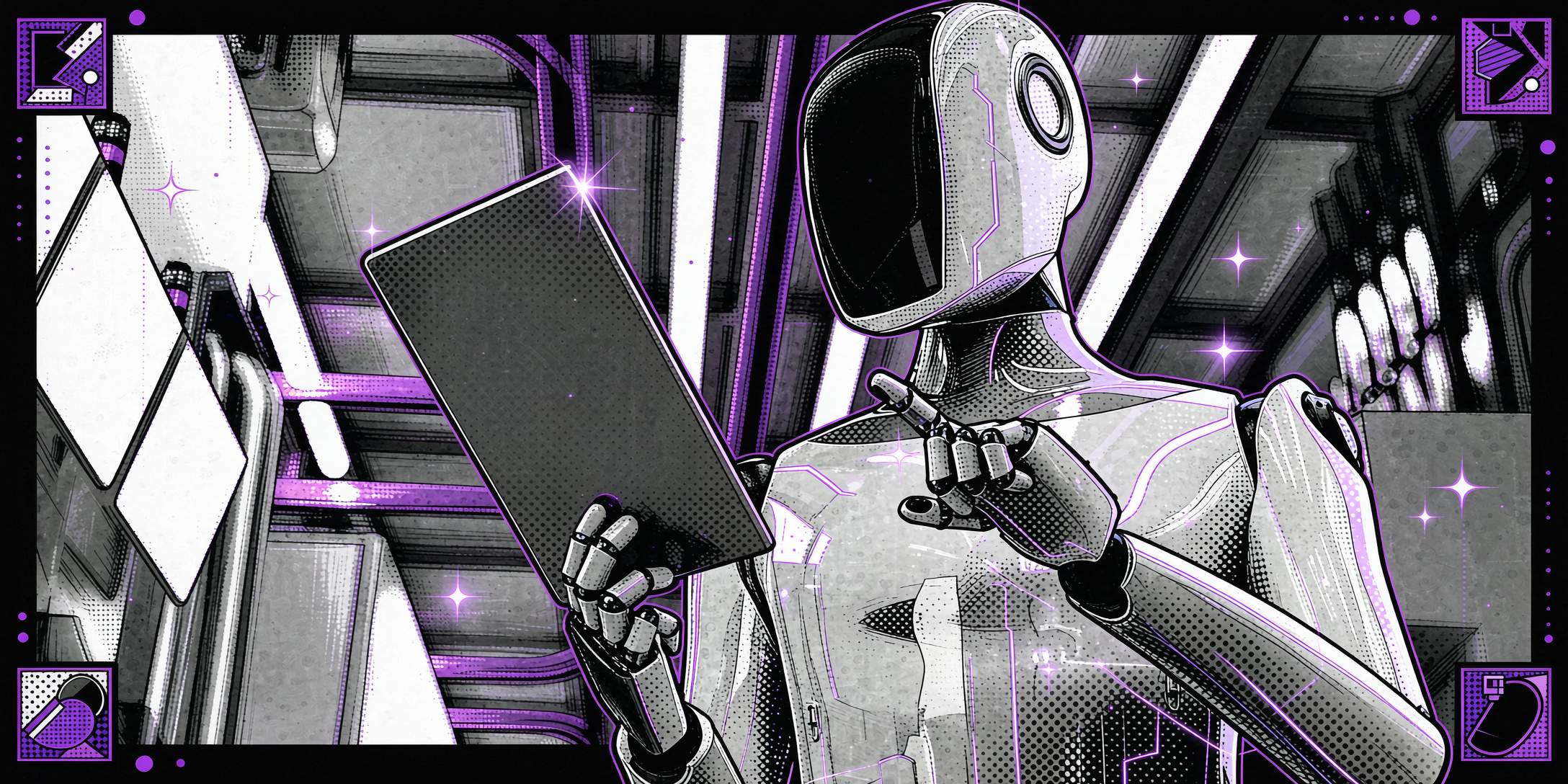
In 1962, the animated series The Jetsons aired, depicting the Jetsons living in the future with flying cars, holograms, various whimsical inventions, and a robot named Rosie. A rarely noticed detail in this cartoon: the house Rosie lived in, the hallways she walked through, the kitchen she used, were designed from the start for a robot housekeeper. That is, some 60 years ago, people's fantasy of home and robot appeared as a matched pair. By contrast, many today discussing robots entering ordinary households overlook a question: is the home the robot is entering ready?
2026年4月,理想汽车前联合创始人、栖息地智能新住宅创始人沈亚楠创立具身智能公司恩戈罗(NGORO)。按照他给的时间表,2027年,第一批约2000台恩戈罗机器人,会跟着栖息地智能住宅一起,真正走进中国家庭。这一次,机器人进家,终于有了deadline。机器人要进家庭,目前大多数团队的想法是:等机器人足够聪明了,它自然就能适应这些乱七八糟的环境,也就是所谓的先发展,再治理。恩戈罗团队成员脱胎于理想,做法是“车路协同”,用沈亚楠自己的话说,这就像智能驾驶里“为车画好的半标准化场地”:隔离带、路缘石、护栏都是标准的,还额外送你一张毫米级的高精地图。
In April 2026, Shen Yanan, former co-founder of Li Auto and founder of Habitat Intelligent New Residences, founded embodied intelligence company NGORO. According to his timeline, in 2027, the first batch of about 2,000 NGORO robots will enter Chinese households alongside Habitat smart residences. This time, robots entering homes finally has a deadline. For robots entering households, most teams currently think: once the robot is smart enough, it will naturally adapt to these messy environments—development first, governance later. NGORO's team members came out of Li Auto, and their approach is "vehicle-road coordination." In Shen Yanan's words, this is like the "semi-standardized field drawn for the car" in intelligent driving: medians, curbs, guardrails are standard, plus a millimeter-level high-precision map thrown in.
这其中,车路协同里的“车”是恩戈罗机器人,“路”就是家,也就是栖息地智能住宅。沈亚楠从2023年开始造家,与房地产行业不同的是,他把住宅当成一个完整产品来做:1270个模块自由组合,9类融合传感布设,有一个统一的“家庭大脑”管着空气、光、水、智能设备,甚至还做了一套和真实住宅1:1的数字孪生系统。没错,“家”在这个语境里,是产品。沈亚楠在理想和栖息地的产品逻辑都是用科技让真实的家庭生活变得更好,因此,沈亚楠的逻辑是要像造车一样,造家。在这个家里,最初就把机器人进家考虑到设计当中:给机器人一个半标准的环境,机器人住进来,不用先花时间熟悉环境,直接就能开始干活。
Here, the "vehicle" in vehicle-road coordination is the NGORO robot, and the "road" is the home—the Habitat smart residence. Shen Yanan started building homes in 2023. Unlike the real estate industry, he treats residences as a complete product: 1,270 modules freely combinable, 9 types of fusion sensing deployed, a unified "home brain" managing air, light, water, and smart devices, and even a 1:1 digital twin system of the real residence. Yes, "home" in this context is a product. Shen Yanan's product logic at both Li Auto and Habitat is to use technology to make real family life better. Therefore, Shen Yanan's logic is to build homes like cars. In this home, robot entry was considered in the design from the start: give the robot a semi-standard environment so it can move in and start working without spending time first familiarizing itself.
这件事最妙的地方,是它顺便解开了具身行业那个最经典的“鸡生蛋”死结:没有数据,就训练不出好模型;没有好模型,机器人就上不了真实场景;上不了真实场景,就拿不到真实数据,绝大多数公司困在这个循环里。而恩戈罗从第一批机器人进栖息地的那天起,月均几十万小时的真机数据就在回流,而且是带着“失败数据”的回流。负责模型训练的李翔来自理想智驾团队,他在面对《晚点LatePost》采访时表示:“今天所有的仿真数据、遥操数据都有一个问题,只有成功,没有失败。但对强化学习来说,失败数据同样重要。”特斯拉的智驾为什么强?一部分原因是它从第一天起就跑在用户的车上,见过无数人类驾驶员犯的傻。恩戈罗想要的,就是家庭机器人里的“特斯拉时刻”。
The most elegant part is that this incidentally unties embodied intelligence's classic chicken-and-egg deadlock: without data, you cannot train a good model; without a good model, the robot cannot enter real scenarios; without real scenarios, you cannot get real data—most companies are trapped in this loop. From the day the first batch of robots enters Habitat, NGORO will have hundreds of thousands of hours of real-machine data flowing back monthly, including "failure data." Li Xiang, responsible for model training, came from Li Auto's autonomous driving team. In an interview with LatePost, he said: "All simulation data and teleoperation data today have a problem—only success, no failure. But for reinforcement learning, failure data is equally important." Why is Tesla's autonomous driving strong? Partly because it has been running on users' cars from day one, seeing countless human drivers make foolish mistakes. What NGORO wants is the "Tesla moment" in home robots.
当然,机器人光有数据还不够,它最终得卖出去、得有人用,还得用得起。在这一点上,栖息地又帮恩戈罗解决了第二件事:它本身就是一个现成的销售渠道。据《晚点LatePost》报道,栖息地目前平均客单价约44万元,机器人跟着住宅一起交付,降下来的获客成本,正好对冲掉机器人的硬件成本。同时供应链负责人廖泽华(理想供应链原一号位)把首款机器人的BOM成本压到了3万元以内,沈亚楠的目标是再往下打几千块。沈亚楠还算了一笔很“造车”的账:一辆智能电动车成本20万,整备质量2.5吨,摊下来每公斤80块;一个机器人就算40-50公斤,价格翻倍,行业成熟后BOM也不该超过1万元。这是他认为“未来大部分家庭都有机会有一台家庭机器人”的前提。
Of course, data alone is not enough. The robot ultimately must be sold, used, and affordable. On this point, Habitat solves a second thing for NGORO: it is itself a ready-made sales channel. According to LatePost, Habitat's average order value is about 440,000 yuan. Robots are delivered together with residences, and the reduced customer acquisition cost offsets the robot's hardware cost. Meanwhile, supply chain head Liao Zehua (former head of Li Auto's supply chain) pushed the first robot's BOM cost below 30,000 yuan, with Shen Yanan aiming to push it down several thousand more. Shen Yanan also did a very "car-like" calculation: a smart EV costs 200,000 yuan, curb weight 2.5 tons, which works out to 80 yuan per kilogram; a robot at 40-50 kilograms, price doubled, and after industry maturity BOM should not exceed 10,000 yuan. This is his premise for believing "most families in the future will have a chance to own a home robot."
聊完家,再聊技术路线。这两年具身智能行业里有个比较讨巧的做法,就是拿视频生成模型去“嫁接”具身动作,既然视频模型能生成“看起来合理”的画面,那让它直接预测机器人下一秒该怎么动,不就完事了。沈亚楠和恩戈罗团队的判断是:这是个误区。视频生成模型的本职工作,是生成“看起来合理”的画面,不是保证这个动作在物理世界里因果正确。恩戈罗的做法是正逆向动力学双向对齐,从头训练世界动作模型。他们的首席科学家钟亦武,是国内最早做VLM的一批人。2021年跟微软合作RegionCLIP/GLIP、2022年跟Meta合作ProcedureVRL,后者用扩散模型从视频里预测未来动作和世界状态,其实就是今年火得一塌糊涂的“世界模型”的雏形。恩戈罗的大脑分快慢两层。慢脑负责长时空记忆、长程任务规划,比如“周三下午把爷爷那件蓝毛衣洗了晒了”;快脑负责原子动作的物理因果,怎么走路、怎么抓杯子、怎么在60厘米的缝里拐弯。
After homes, the technology roadmap. In embodied intelligence over the past two years, there has been a convenient approach: grafting video generation models onto embodied actions. Since video models can generate "plausible-looking" frames, why not let them directly predict the robot's next move? Shen Yanan and the NGORO team judge this as a misconception. Video generation models' job is to generate "plausible-looking" images, not to guarantee that the action is causally correct in the physical world. NGORO's approach is bidirectional alignment of forward and inverse dynamics, training a world action model from scratch. Their chief scientist, Zhong Yiwu, is among China's earliest VLM researchers. He collaborated with Microsoft on RegionCLIP/GLIP in 2021 and with Meta on ProcedureVRL in 2022; the latter used diffusion models to predict future actions and world states from video—essentially the prototype of today's explosively popular "world model." NGORO's brain has two layers: slow and fast. The slow brain handles long-horizon memory and long-range task planning, like "wash and dry grandpa's blue sweater Wednesday afternoon"; the fast brain handles atomic action physics—how to walk, how to grasp a cup, how to turn in a 60-centimeter gap.
恩戈罗最让人意外的,不是它技术多牛,而是它的产品足够克制。现在几乎所有做家庭机器人的团队,PPT上都能给你列出几百种功能:能做饭、能辅导作业、能陪老人聊天、能端茶倒水。恩戈罗第一款产品,只做四件事:洗衣、房屋清洁、物品归位、递送辅助。而且要求每一件,都做到99%稳定可用。首席产品官韩龄(也是理想智能座舱和智驾产品的早期负责人)打过一个比方:这就像智能驾驶里的“自动泊车”,用户每天都要用,车位有时候窄、有时候有障碍,但你停得比人还稳,用户立刻就感知到价值。简单来说,就是不需要它什么都会,只需要这件事它每次都能做对。沈亚楠甚至给机器人想好了在家庭里的“人设”——田螺姑娘。机器人关机的时间本来就比工作时间长,早期效率也一定比人慢,那不如趁人出门、趁孩子上学、趁老人午睡的时候,把衣服洗了、把地吸了,家人在的时候,再陪你聊两句、逗逗猫。所以恩戈罗的机器人不做双足、不做1.8米高、不做太拟人的脸。而是采用轮式底盘,最小转弯半径30厘米,身体是一条顺滑的曲线,关节电机全藏起来,6自由度灵巧手外面包一层织物,头顶一块带弧度的屏,深夜老人起夜,看到墙角一个圆圆的、萌萌的东西在扫地,不会被吓一跳。
What is most surprising about NGORO is not how advanced its technology is, but how restrained its product is. Almost every home robot team today can list hundreds of functions on their slides: cooking, tutoring homework, chatting with elderly, pouring tea. NGORO's first product does only four things: laundry, home cleaning, item return, and delivery assistance. And it requires each to be 99% stably usable. Chief Product Officer Han Ling (also an early head of Li Auto's smart cockpit and autonomous driving products) made an analogy: this is like "auto parking" in intelligent driving—users use it daily, spaces are sometimes narrow, sometimes obstructed, but if you park more steadily than a human, users immediately perceive the value. Simply put, it does not need to do everything, just to do this one thing right every time. Shen Yanan even thought up a "persona" for the robot in the home—the "田螺姑娘" (a folkloric helper spirit). Robots are off longer than they are on, and early efficiency will certainly be slower than humans. So better to wash clothes and vacuum while people are out, kids at school, elderly napping, and when family is present, chat a bit and tease the cat. So NGORO's robot does not do bipedal, does not do 1.8 meters tall, does not do a too-human face. Instead, wheeled chassis, minimum turning radius 30 centimeters, body a smooth curve, joint motors all hidden, 6-DOF dexterous hand wrapped in fabric, a curved screen on top. Late at night when an elderly person gets up, seeing a round, cute thing sweeping in the corner will not scare them.
不做拼图团队,只做闭环团队。恩戈罗的核心班底都来自理想汽车团队,这也是它手里最大的一张牌。现在具身行业招人有个通病:到处“拼图”,从互联网公司挖个做过大模型的,从车企挖个做智驾的,从硬件公司挖个做供应链的,凑一桌,PPT就成立了。沈亚楠管这个叫“拼图逻辑”,而恩戈罗要的是“闭环逻辑”。什么叫闭环?沈亚楠:理想汽车联合创始人,从0到1把理想L系列卖成了家庭SUV的头部,2022年又创办栖息地智能住宅,服务过成千上万户真实中国家庭。钟亦武:首席科学家,北大助理教授,VaLuE Lab负责人,VLM领域最早的一批学者之一。韩龄:首席产品官,2017年加入理想,是智能座舱和智驾产品最早期的成员之一。廖泽华:供应链负责人,2015年加入理想,理想供应链从0到1的一号位。李翔:负责模型训练,理想智驾出身,亲手踩过“加了新数据反而把旧功能搞崩”的坑,知道数据闭环不是堆数据量,是找对应关系、做诊断。这几个人不是凑出来的,他们一起在理想身上,已经把产品定义、技术研发、数据闭环、供应链、C端规模化交付这一整条链路,从0到1跑通过一遍。
No puzzle team, only a closed-loop team. NGORO's core team all came from Li Auto—its biggest card. Hiring in embodied intelligence today has a common problem: piecing together from everywhere—a large-model person from an internet company, an autonomous driving person from an automaker, a supply chain person from a hardware company, assembled around a table, and the PPT is成立. Shen Yanan calls this "puzzle logic," while NGORO wants "closed-loop logic." What is closed loop? Shen Yanan: Li Auto co-founder, took the Li L series from 0 to 1 to the top of family SUVs, then founded Habitat smart residences in 2022, serving thousands of real Chinese families. Zhong Yiwu: chief scientist, Peking University assistant professor, head of VaLuE Lab, among the earliest VLM scholars. Han Ling: chief product officer, joined Li Auto in 2017, among the earliest members of smart cockpit and autonomous driving products. Liao Zehua: supply chain head, joined Li Auto in 2015, the number-one person in Li Auto's supply chain from 0 to 1. Li Xiang: responsible for model training, from Li Auto's autonomous driving, personally stepped through the pit of "adding new data broke old functions," knows data loops are not about piling up data volume but finding correspondences and doing diagnostics. These people were not assembled—together at Li Auto, they already ran the entire chain of product definition, technology R&D, data loops, supply chain, and C-end scaled delivery from 0 to 1.
物理AI进家,需要的不是懂造车的标签,而是拥有实际的人做过具体的事。恩戈罗团队做过的事,恰好是物理AI进家需要的。如今,具身智能已经进入2.0全栈阶段,最后能跑出来的公司,本体、大脑、数据、生态都得自己做,而且得从第一天就以全栈的方式想清楚产品、数据、团队和技术路线。这件事没有什么捷径,就和造车一样,核心是靠谱。具身智能满地捡钱的阶段已经结束了,现在投资人对讲故事、讲技术路线、讲团队已经审美疲劳,具身公司得拿出产品、成本、交付和数据的闭环,而这几样,恰好是理想系班底最熟的功课。车是移动的第二空间,家是生活的第一空间,机器人给这个空间加上手脚,人可以自然地把事情交给机器人,自己有更多时间去生活。栖息地是恩戈罗的第一个训练场,但不会是唯一一个,从家庭出发,下一步或许是社区、商超、旅居,再往后是千行百业。最后用沈亚楠的一句话做结尾:我们既懂家,也做过自动驾驶从0到1的量产,还有前沿的多模态具身科学家加入,以及栖息地提供的场景。如果这样还不够,那还有谁能做到呢?
Physical AI entering homes needs not the label of "knows how to build cars," but actual people who have done specific things. What the NGORO team has done happens to be what physical AI entering homes needs. Today, embodied intelligence has entered the 2.0 full-stack phase. The companies that ultimately emerge must do body, brain, data, and ecosystem themselves, and must think through product, data, team, and technology roadmap in a full-stack way from day one. There is no shortcut—like car-making, the core is reliability. The phase of easy money in embodied intelligence is over. Investors are now aesthetically fatigued by storytelling, technology roadmaps, and team introductions. Embodied companies must deliver a closed loop of product, cost, delivery, and data—exactly the homework the Li Auto alumni team knows best. A car is the mobile second space; home is life's first space. Robots add hands and feet to this space, and people can naturally delegate tasks to robots, giving themselves more time to live. Habitat is NGORO's first training ground, but will not be the only one. Starting from the home, next might be communities, supermarkets, and travel residences, then thousands of industries. Closing with Shen Yanan's line: we understand homes, we have done autonomous driving from 0 to 1 in mass production, we have frontier multimodal embodied scientists joining, and Habitat provides the scenarios. If that is not enough, who else can do it?