
IEEE Spectrum 10月8日报道,苏黎世联邦理工学院的研究人员把一只现成的机械手改造成了一个完全自包含的机器人,它用指尖走路,同时用同样的手指操作环境。一只手接在机械臂末端,对大多数人类来说是理所当然的,但如果机器人不必遵循同样的规则呢?除了能完美充当万圣节道具——任何一个打算扮成亚当斯一家的人都会需要它,这家人 famously 有一只叫Thing的无实体行走的手——研究人员说,这只机械手可能让机器人在传统机械臂够不到的地方操作控制器和处理物体。
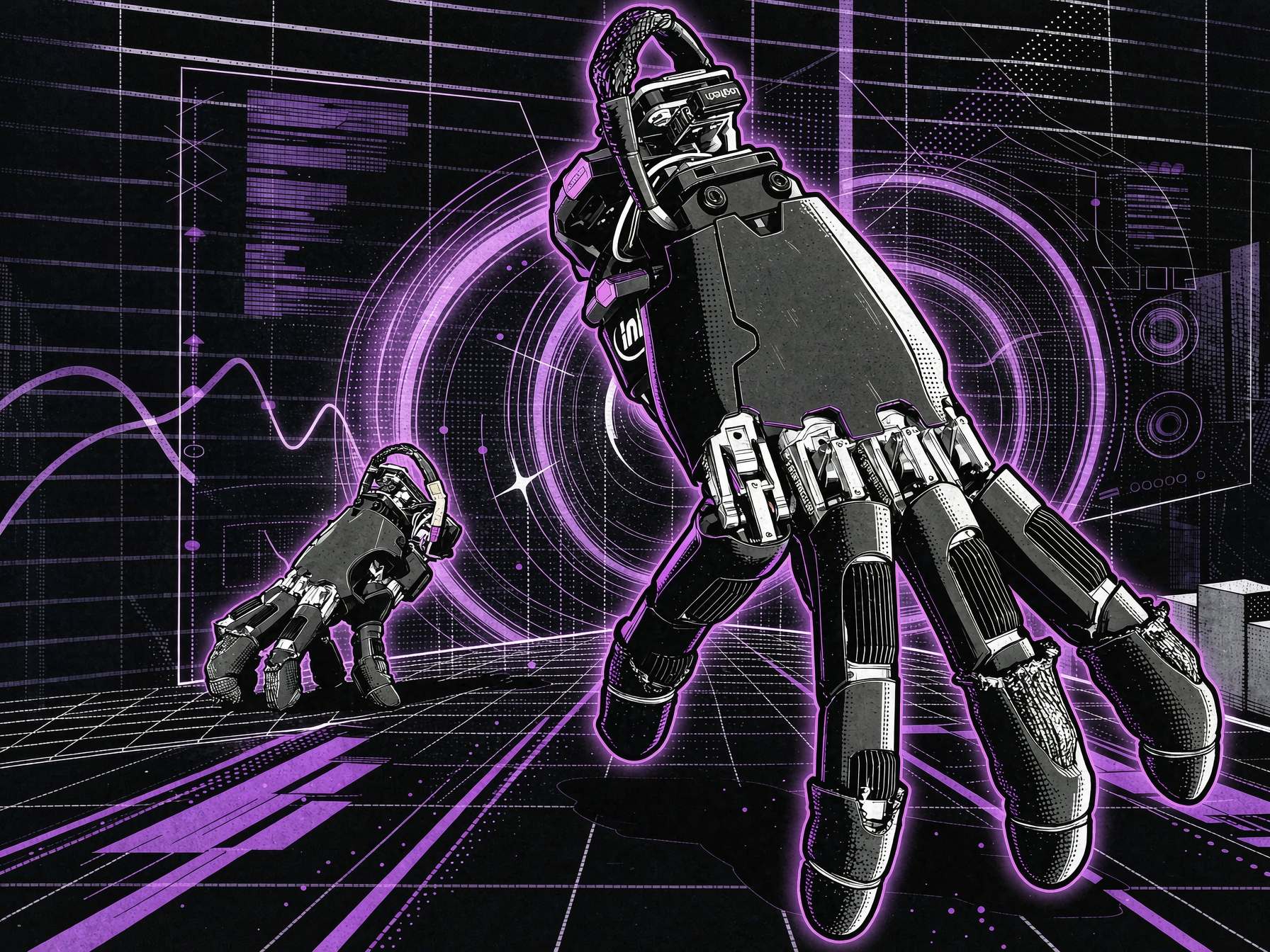
IEEE Spectrum reported on October 8 that researchers from ETH Zurich have turned an off-the-shelf robotic hand into a completely self-contained robot that walks on its fingertips while using those same fingers to manipulate its environment. A hand attached to the end of an arm is a given for most humans, but what if robots didn't have to play by the same rules? Besides making the perfect Halloween accessory for anyone planning to dress up as a member of the Addams Family—who were famously accompanied by a disembodied walking hand called Thing—the researchers say this robotic hand could make it possible to operate controls and handle objects in places a traditional robot arm can't reach.
项目负责人、苏黎世联邦理工学院软体机器人实验室博士生Amirhossein Kazemipour认为,这只手在工业环境中的精细维护任务,或者在搜救中可能有用,机器人可以拆下自己的手去探索身体其他部分太宽而进不去的狭小空间。更广泛地说,他说这项工作朝着一种新的机器人方法迈出了一步,在这种方法中,身体部位不局限于单一角色。Kazemipour告诉IEEE Spectrum:“我想看看一只机械手在没有机器人其他部分的情况下能做多少事。与其用这种传统的机器人部件观,不如说我们能否用这些部件去做它们并非为此设计的其他任务?”
Amirhossein Kazemipour, a Ph.D. candidate in the Soft Robotics Lab at ETH Zurich who led the project, believes this hand could prove useful in fiddly maintenance tasks in industrial settings, or in search and rescue, where a robot could detach its hand to explore confined spaces too tight for the rest of its body. More broadly, he says, the work is a step toward a new approach to robotics in which body parts are not confined to a single role. Kazemipour told IEEE Spectrum: "I wanted to see how much a robotic hand could do without the rest of the robot. Instead of having this traditional view of robotic parts, what if we could use those parts to do other tasks that they are not designed to do?"
这不是第一次尝试让机械手走路,但之前的工作通常依赖专门设计的手。ETH团队反而决定使用Wuji Technology的现成硬件,外加一个80克的背包,里面装着电池、惯性测量单元和一块Raspberry Pi Zero。Kazemipour说,他们决定用商用机械手,是因为不想在手部操作能力上妥协。他补充说,这带来了重大挑战,因为手的形状是为抓取而优化的,不是为爬行优化的。为了教这只手走路,研究人员在仿真中用强化学习训练了一个模型。但Kazemipour说,手的不寻常几何形状意味着他们不能直接重用训练其他种类足式机器人的方法。标准四足或双足机器人往往左右对称,这简化了行走和平衡。相比之下,手完全不对称,手指长度不同,还有一个对生拇指。
This is not the first attempt to get a robot hand to walk, but previous work has typically relied on specially designed hands. The ETH team instead decided to use off-the-shelf hardware from Wuji Technology, augmented with an 80-gram backpack containing a battery, an inertial measurement unit (IMU), and a Raspberry Pi Zero. Kazemipour says they decided to go with a commercial robot hand because they didn't want to compromise on the hand's manipulation capabilities. This introduced significant challenges, he adds, because a hand's shape is optimized for grasping rather than crawling. To teach the hand to walk, the researchers trained a model in simulation using reinforcement learning. But Kazemipour says the unusual geometry of a hand meant they couldn't just reuse methods used to train other kinds of legged robots. Standard quadrupeds or bipeds tend to be symmetrical on their left and right sides, which simplifies walking and balance. Hands, in contrast, are not at all symmetrical, with fingers of different lengths and an opposable thumb.
除了对以正确速度和方向移动给予奖励、对摇晃或颠簸运动等给予惩罚之外,团队引入了一种新方法,在仿真训练中让手保持爬行姿态。为了应对不等长的手指,他们给每根手指一个相对于手掌的目标位置,基于它在爬行姿态下自然所在的位置。然后他们对偏离这个参考点太远的手指进行惩罚,创造出他们所称的“虚拟弹簧”,把手指拉回爬行姿态。关键的是,手指前后移动的惩罚显著小于左右移动的惩罚,所以以这种方式迈步,手的代价相比它因移动获得的奖励非常小。团队还训练了独立的模型,用于手摔倒时扶正、按键盘上的键、把物体推到目标位置等技能。Kazemipour说,所有四个模型都装得下车载计算机,控制器可以在必要时切换。
In addition to rewards for moving at the right speed and in the right direction and penalties for things like wobbling or jerky movement, the team introduced a novel way to keep the hand in a crawling stance during simulated training. To account for unequal digit length, they gave each finger its own target position relative to the palm, based on where it naturally sits when in the crawling posture. They then penalized fingers for straying too far from that reference point, creating what they describe as "virtual springs" that pull the fingers back to the crawling stance. Crucially, the penalties for fingers moving forward and backward are significantly less than those for moving side to side, so taking steps that way costs the hand very little compared with the rewards it receives for moving. The team also trained separate models for skills like righting the hand when it falls over, pressing keys on a keyboard, and pushing objects to a target. All four models fit on the onboard computer, says Kazemipour, and the controller can switch between them as necessary.
在真实世界测试中,这只手爬过了14种不同的表面,包括光滑地板、金属格栅、草地和砾石。其他实验确认它能左右转弯,平均速度达到每秒9厘米。这只手在25次试验中有21次能自己扶正。当给它一个来自俯视摄像头的视频流时,它甚至能自主把一个41克的立方体推到最远40厘米外的目标位置,连续成功15次。东京大学教授Masahiko Inami说:“这项工作最让我感兴趣的是,同样的手指既能移动手,又能支撑它的重量,还能与周围环境互动。”他的团队也开发了手形行走机器人。他同意移动的手对于到达狭小空间和操作整条手臂难以触及的控制装置可能有用,不过他说实际部署需要车载感知和更稳健的导航。Inami实验室的博士生Hideki Shimobayashi也指出,行走给手施加的负载与抓取非常不同,所以耐用性可能是个挑战。
In real-world tests, the hand crawled across 14 different surfaces including smooth floors, metal grates, grass, and gravel. Other experiments confirmed it could make both right and left turns, and hit an average speed of 9 centimeters per second. The hand was able to right itself in 21 of 25 trials. When given a video feed from an overhead camera, it even managed to autonomously push a 41-gram cube to targets up to 40 cm away 15 times in a row. Masahiko Inami, a professor at the University of Tokyo whose group has developed hand-shaped walking robots, says: "What interests me most about this work is that the same fingers can move the hand, support its weight, and interact with its surroundings." He agrees that a mobile hand could be useful for reaching confined spaces and operating controls that an entire arm could not easily access, though he says practical deployment would require onboard perception and more robust navigation. Hideki Shimobayashi, a Ph.D. student in Inami's lab, also points out that walking puts very different loads on a hand compared to grasping, so durability may be a challenge.
哥伦比亚大学机械工程副教授Matei Ciocarlie说,这是一个“很酷的结果”,表明机械手不必被限制在与人类手相同的能力上。他说:“人们可以想象一个全新的移动操作器类别,它们同时具备灵巧性、能够穿越复杂地形,并且能够操作与自身大小相当的载荷。”Kazemipour把他的工作视为一个更长期愿景的一部分,即机器人由不绑定单一任务甚至单一身体方案的部件组成,他称之为“自主模块化具身”。他说:“机器人身体部位不应该被永久分配给单一功能。它们可以根据任务,在角色之间动态转换,在一个具身系统的组件和自主智能体之间转换。”
Matei Ciocarlie, an associate professor of mechanical engineering at Columbia University, says it's a "cool result" that suggests robot hands don't have to be restricted to the same capabilities as their human counterparts. "One can imagine an entirely new class of mobile manipulators that are simultaneously dexterous, able to traverse complex terrain, and able to manipulate payloads comparable in size to themselves," he says. Kazemipour sees his work as part of a longer-term vision for robots made up of parts that are not tied to a single job or even a single body plan, something he calls "autonomous modular embodiments." "Robotic body parts should not be permanently assigned to a single function," he says. "They can dynamically transition between roles, between being components of one embodiment system and autonomous agents, according to the task."