

研究人员开发出一种技术,让用户通过弯曲和伸直手指来移动一个小机器人。用户还可以在拾取和移动物体的同时,查看机器人传回的图像和接触信息。这个系统把人工肌肉、摄像头和触觉传感器整合在一个仿甲虫的小型软体机器人上,预计可用于远程任务,比如检查人难以到达的狭窄空间和取回小物体。这项研究由韩国科学技术院材料科学与工程系Sang Ouk Kim教授领导,与加州理工学院Wei Gao教授和南洋理工大学Hirotaka Sato教授的研究组合作完成。论文发表在《Science Advances》杂志上。
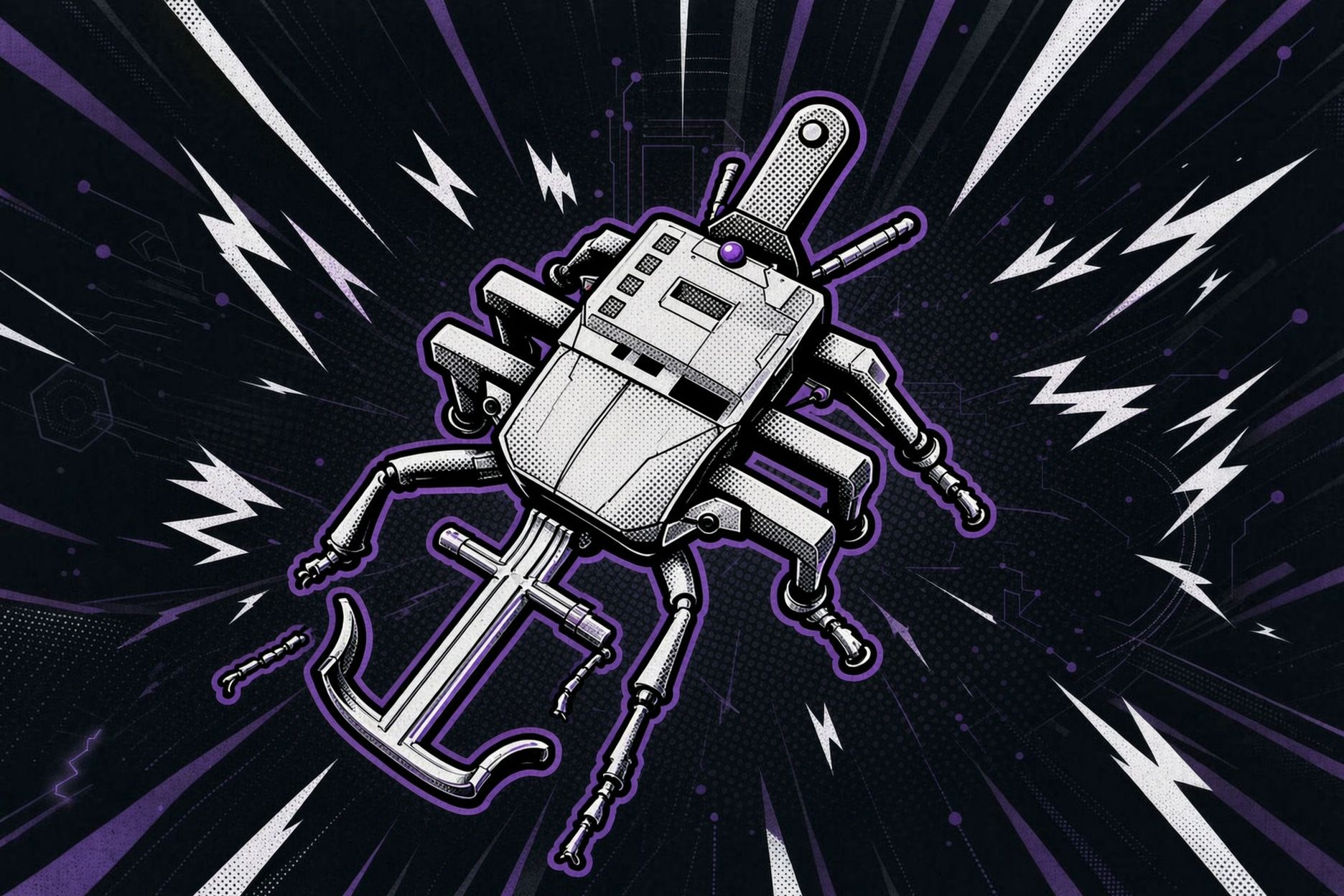
Researchers have developed a technology that lets a user move a small robot by bending and straightening a finger. The user can also pick up and move objects while checking the images and contact information that the robot sends back. The system combines artificial muscles, a camera, and tactile sensors in a small soft robot modeled on a beetle. It is expected to be used in remote tasks, such as inspecting narrow spaces that are difficult for people to reach and retrieving small objects. The research was led by Professor Sang Ouk Kim from KAIST's Department of Materials Science and Engineering, working with the research groups of Professor Wei Gao at Caltech and Professor Hirotaka Sato at NTU. The paper is published in the journal Science Advances.
当人们抓取物体时,用眼睛找到它在哪,用指尖的感觉检查接触。一个根据环境调整工作的机器人,也需要把运动和感知功能连接起来。软体机器人由柔软、可变形的材料制成。但在这些机器人中,驱动、感知和控制往往被做成独立的部分,或者依赖复杂的设备。这使得在小型机器人里集成多种功能变得困难。研究人员设计的机器人,用类似生物肌肉收缩方式的人工肌肉来行走和抓取物体。他们把这些肌肉与摄像头、压力传感器和戴在手指上的可拉伸传感器贴片连接起来。有了这套设置,用户可以在控制机器人的同时,查看周围环境以及它与物体的接触情况。
When people grasp an object, they use their eyes to find where it is and the sensation in their fingertips to check the contact. A robot that adjusts its work to its surroundings also needs its movement and sensing functions to be connected. Soft robots are built from soft, deformable materials. In these robots, however, actuation, sensing, and control are often built as separate parts or depend on complex devices. This makes it difficult to integrate several functions into a small robot. The researchers designed the robot to walk and grip objects using artificial muscles that contract in a similar way to biological muscles. They linked these muscles with a camera, a pressure sensor, and a stretchable sensor patch worn on the finger. With this setup, the user can control the robot while checking its surroundings and its contact with objects.
团队首先分析了甲虫腿部肌肉与其关节运动的关系。他们用这些结果来决定BeetleBot人工肌肉的放置位置,以及如何设计它的腿。人工肌肉是通过3D打印液晶弹性体制成的,这是一种加热时会收缩的聚合物。它们与一个通过电产生热量的驱动模块结合。机器人每个部位的肌肉可以独立操作,操作顺序可以调整。这让机器人能向前走,以及左转或右转。研究人员还基于甲虫用来抓住猎物的下颚,制造了一个软体夹爪。夹爪把人工肌肉与电容式压力传感器结合起来,所以它能抓住物体并检测接触。当人工肌肉收缩时,夹爪合拢围住物体。压力传感器然后检测接触时施加的压力。
The team first analyzed how the leg muscles of a beetle relate to the movement of its joints. They used the results to decide where to place BeetleBot's artificial muscles and how to design its legs. The artificial muscles were made by 3D printing a liquid crystal elastomer (LCE), a polymer that contracts when heated. They were combined with an actuation module that produces heat from electricity. The muscles in each part of the robot can be operated independently, and the order in which they operate can be adjusted. This allows the robot to walk forward and turn left or right. The researchers also built a soft gripper based on the mandibles that beetles use to hold their prey. The gripper combines artificial muscles with a capacitive pressure sensor, so it can grip an object and detect the contact. When the artificial muscles contract, the gripper closes around the object. The pressure sensor then detects the pressure applied during contact.
为了控制机器人,团队使用了一个可拉伸传感器贴片,其电阻随手指移动而变化。当手指弯曲和拉伸贴片时,内部碳纳米管形成的导电路径发生变化,从而改变电阻信号。研究人员把这些信号分成四种命令,前进、左转、右转和抓取物体。命令通过低功耗蓝牙发送到BeetleBot,机器人执行匹配的动作。用户通过一个小型机载摄像头查看机器人的周围环境,并使用夹爪中压力传感器的数据检查与物体的接触。基于这些信息,用户决定下一个动作,并用手指移动发送命令。这样,系统提供了双向反馈。命令从用户到机器人,机器人检测到的信息返回给用户。
To control the robot, the team used a stretchable sensor patch whose electrical resistance changes as the finger moves. When the finger bends and stretches the patch, the conductive paths formed by carbon nanotubes (CNTs) inside it change, which changes the resistance signal. The researchers sorted these signals into four commands: move forward, turn left, turn right, and grip an object. The commands are sent to BeetleBot over Bluetooth Low Energy, and the robot carries out the matching action. The user views the robot's surroundings through a small onboard camera and checks contact with objects using data from the pressure sensor in the gripper. Based on this information, the user decides on the next action and sends a command with a finger movement. In this way, the system provides bidirectional feedback. Commands go from the user to the robot, and the information the robot detects goes back to the user.
使用这种控制方法,研究人员展示了BeetleBot可以避开障碍物、接近目标物体,然后抓住并搬运它。通过把基于人工肌肉的行走和抓取、视觉和触觉感知,以及用户控制连接在一个系统中,这项研究显示小型软体机器人可以执行实用任务。这些结果预计将支持用于远程任务的软体机器人开发,比如检查条件、在人难以进入的空间里取回小物体。在机器人能够更广泛使用之前,例如在环境探索或工业设备检查中,人工肌肉的驱动速度、能源效率和供电需要改进。它的性能还需要在真实工作环境中测试。
Using this control method, the researchers showed that BeetleBot could avoid obstacles, approach a target object, and then grip and carry it. By connecting artificial muscle-based walking and gripping, visual and tactile sensing, and user control in a single system, the study shows that small soft robots can carry out practical tasks. The results are expected to support the development of soft robots for remote tasks, such as checking conditions and retrieving small objects in spaces that are hard for people to access. Before the robot can be used more widely, for example in environmental exploration or industrial equipment inspection, the actuation speed, energy efficiency, and power supply of the artificial muscles will need to be improved. Its performance will also need to be tested in real working environments.
Kim说,这项研究通过把人工肌肉的运动、传感和用户控制连接在一个系统中,扩展了软体机器人的潜在用途。他补充说,他期待与加州理工学院和其他合作伙伴的联合研究,能够为能在人难以进入的空间里工作的软体机器人做出贡献。论文第一作者、成均馆大学的Inho Kim教授说,这项工作的一个关键特征是双向反馈,把机器人检测到的信息与用户的下一个动作连接起来。他补充说,他计划提高人工肌肉的驱动速度和能源效率,并改进使用传感信息的控制方法,以便机器人可以发展成能在各种环境中工作的软体机器人。
Kim said this study expands the potential uses of soft robots by connecting the movement of artificial muscles, sensing, and user control in a single system. He added that he expects the joint research with Caltech and other partners to contribute to soft robots that can work in spaces that are difficult for people to access. Professor Inho Kim of Sungkyunkwan University, the paper's first author, said a key feature of this work is the bidirectional feedback, which links the information detected by the robot to the user's next action. He added that he plans to increase the actuation speed and energy efficiency of the artificial muscles and improve control methods that use sensory information, so that the robot can be developed into a soft robot that works in a variety of environments.


