

停车入库困难户的福音?奔驰阿凡达概念车能像螃蟹一样横向移动,颠覆你的驾驶认知。更炸裂的是,它还升级了脑机接口,用“意念”就能操控汽车,科幻电影都不敢这么拍。这条视频展示的是奔驰在阿凡达概念车基础上的又一次升级。这款概念车最早在2020年亮相,当时的卖点是模仿潘多拉星球生物的造型和可横向移动的底盘。这次升级加入的脑机接口,把这款车的技术展示方向从机械层面延伸到了神经层面。
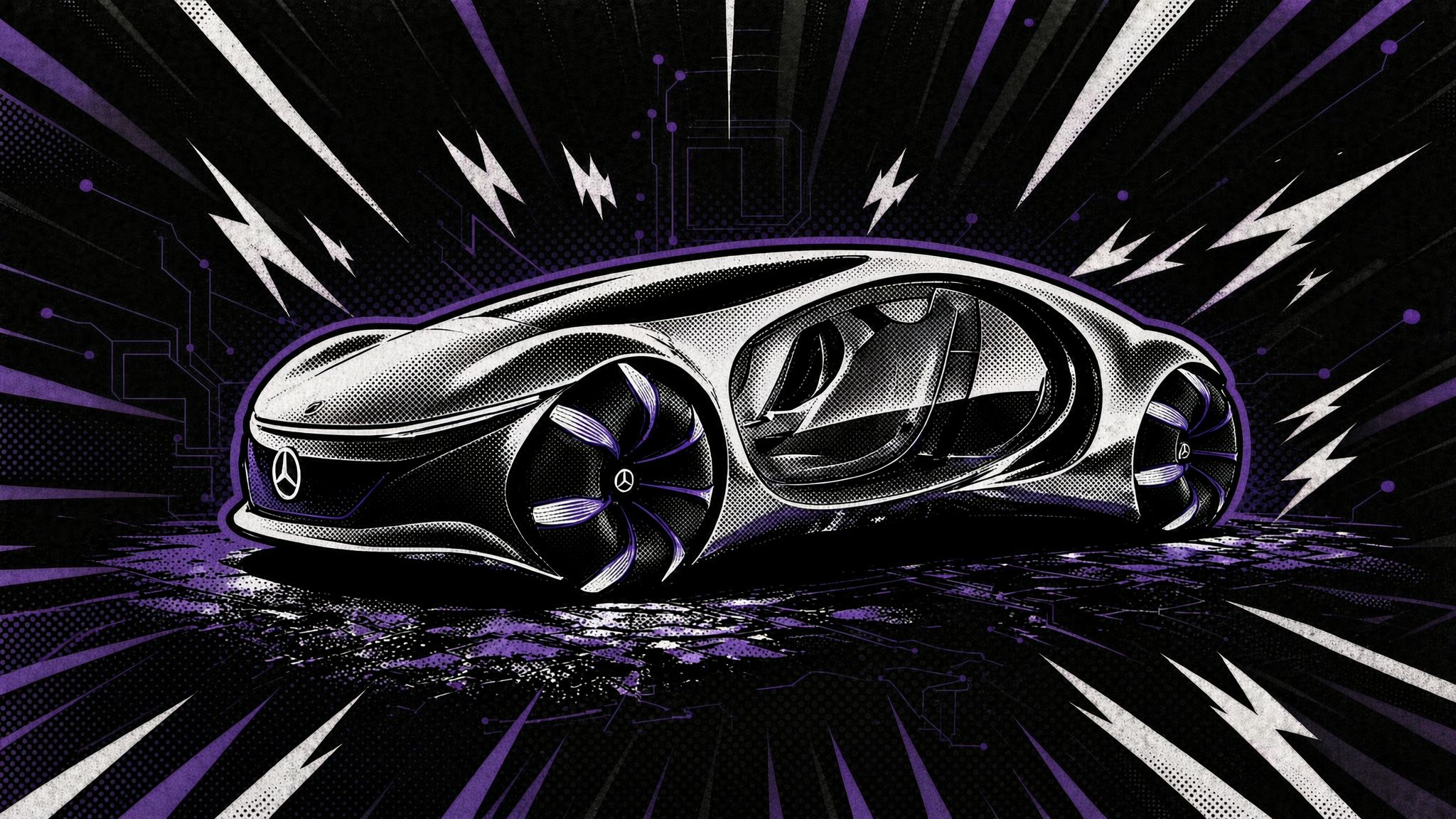
Good news for those who struggle with parking? The Mercedes-Benz Avatar concept car can move laterally like a crab, upending your driving cognition. Even more explosively, it has upgraded with a brain-computer interface, letting you control the car with "thoughts"—even sci-fi movies would not dare film this. This video shows another upgrade to Mercedes-Benz's Avatar concept car. The concept car first appeared in 2020, with selling points including Pandora creature-inspired styling and a laterally movable chassis. The brain-computer interface added in this upgrade extends the car's technology demonstration direction from the mechanical level to the neural level.
横向移动这个功能,在概念车上展示过很多次,技术上已经不算新鲜。它的核心是每个车轮都可以独立控制转向角度和驱动力,四个轮子可以同向转动,也可以反向转动,让车实现横向平移、原地旋转等动作。真正值得单独看的是脑机接口这部分。用“意念”操控汽车,目前阶段能实现的功能非常有限。脑机接口读取的是脑电信号,这些信号的分辨率和稳定性都还不够支撑复杂的驾驶操作。在概念车上展示的脑机接口,更多是采集驾驶员的注意力状态、疲劳程度这类信息,用于辅助驾驶系统的决策,而不是直接用意念控制方向盘和油门。奔驰把这两项技术放在同一款概念车上,更像是在展示它对未来汽车交互方式的想象,而不是宣布某项技术已经可以量产。
The lateral movement function has been demonstrated many times on concept cars and is technically no longer novel. Its core is that each wheel can independently control steering angle and drive force; all four wheels can turn in the same direction or opposite directions, enabling lateral translation, in-place rotation, and other maneuvers. What truly deserves separate attention is the brain-computer interface part. Controlling a car with "thoughts" currently enables very limited functions. Brain-computer interfaces read EEG signals, whose resolution and stability are still insufficient to support complex driving operations. The brain-computer interface demonstrated on the concept car is more about collecting driver attention states, fatigue levels, and similar information for assisted driving system decisions, rather than directly controlling the steering wheel and throttle with thoughts. Mercedes-Benz putting these two technologies on the same concept car is more about showcasing its imagination of future car interaction than announcing that a technology is ready for mass production.
这件事放在前面讨论的技术脉络里,可以和脑机接口的产业化进展放在一起看。前面讨论过Butterfly Network和Bridge Neurotech用超声做非侵入式脑机接口,也讨论过Merge Labs拿到2.52亿美元种子轮融资,追逐避免植入物、电极或手术的大脑理解方法。这些公司做的都是医疗级的脑机接口,目标很明确,帮助瘫痪病人控制外部设备,或者治疗神经系统疾病。奔驰概念车上的脑机接口,做的是消费级应用,目标是让驾驶更安全、更舒适。两条路的技术门槛和监管要求完全不同。医疗级脑机接口需要严格的临床试验和监管审批,消费级脑机接口只需要满足一般电子产品的安全和隐私要求。奔驰展示的这个方向,如果未来真的落地,更可能是以驾驶员状态监测的形式进入量产车,而不是用意念开车。
Placed in the technical thread discussed earlier, this matter can be viewed alongside brain-computer interface industrialization progress. Earlier we discussed Butterfly Network and Bridge Neurotech using ultrasound for non-invasive brain-computer interfaces, and Merge Labs raising a $252 million seed round to pursue brain understanding methods avoiding implants, electrodes, or surgery. These companies are doing medical-grade brain-computer interfaces with clear goals—helping paralyzed patients control external devices or treating neurological diseases. The brain-computer interface on Mercedes-Benz's concept car does consumer-grade application, aiming to make driving safer and more comfortable. The two paths have completely different technical thresholds and regulatory requirements. Medical-grade brain-computer interfaces require rigorous clinical trials and regulatory approval; consumer-grade brain-computer interfaces only need to meet general electronic product safety and privacy requirements. If Mercedes-Benz's demonstrated direction truly lands in the future, it is more likely to enter mass production cars as driver state monitoring rather than driving with thoughts.


