

10月13日,深圳具身智能公司星尘智能宣布完成10亿元新一轮融资,估值150亿元。三个月前还是100亿,半年连融四轮,最近两轮超过20亿。钱来得又快又密,但比起估值,更值得拆的是另一件事,这家公司造的,到底是个什么东西。同样做人形机器人,有的公司发布会开了三年,货还在演示视频里,星尘智能已经把8.99万元的T1发到客户手里,客户名单里写着央视和京东。同样是融资,2024年投资人开口就问做不做端到端,2025年问做不做VLA,今年开始问商业化做到什么程度了。提问的变化,比估值的变化更能说明行业走到了哪一步。
On October 13, Shenzhen embodied intelligence company Astribot announced a new funding round of 1 billion yuan, valuing it at 15 billion yuan. Three months ago it was 10 billion; four rounds in half a year, the last two exceeding 2 billion combined. Money comes fast and dense, but more worth dissecting than the valuation is another matter—what exactly does this company make. Also doing humanoid robots, some companies have held launch events for three years with products still in demo videos; Astribot has already shipped its 89,900-yuan T1 to customers, with names including CCTV and JD.com on the client list. Also raising funds, in 2024 investors asked "do you do end-to-end," in 2025 they asked "do you do VLA," this year they ask "how far has commercialization gone." The change in questions explains the industry's stage better than the change in valuation.
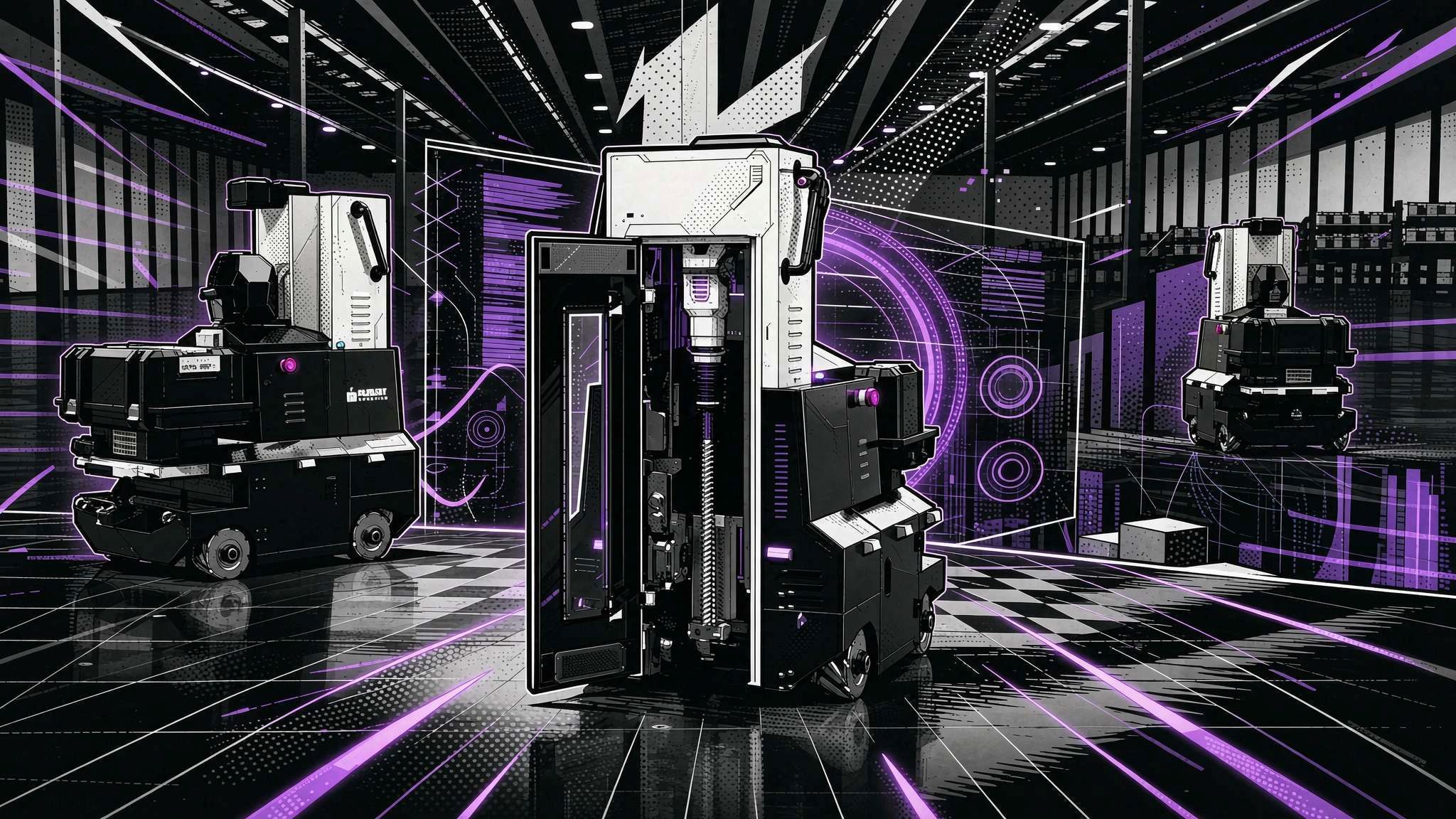
一句话说清楚,星尘智能造的是绳驱AI人形机器人。它有人形,关节由一根根腱绳拉动,原理接近人体的肌腱带动骨骼。2026年6月开始发货的T1,整机高1.55米,重约66公斤,23个自由度,单臂负载5公斤,起售价8.99万元。它能做什么,做饭、洗衣、收纳、调酒、煎牛排,也能进实验室做实验、在仓储车间分拣零件、给车充电。S旗舰系列更早,2025年9月就开启了千台级订单。还有一个问题很多人会问,为什么非得做成人形。答案很朴素,真实世界是为人的尺寸设计的。楼梯、门把手、厨房台面、仓储货架,全是按人的身体比例造的。轮式底盘只能在平地上转圈,两条腿加两只手,才能走进人的环境干活。人形无关执念,它就是进场的通行证。
To put it clearly in one sentence: Astribot makes cable-driven AI humanoid robots. It has a human form, with joints pulled by tendon-like cables, a principle close to how human tendons drive bones. The T1, shipping since June 2026, stands 1.55 meters tall, weighs about 66 kg, has 23 degrees of freedom, 5 kg single-arm payload, and starts at 89,900 yuan. What can it do—cook, do laundry, organize, mix drinks, pan-fry steak, also enter laboratories to do experiments, sort parts in warehouse workshops, charge cars. The S flagship series is earlier, having opened thousand-unit orders in September 2025. Another question many ask: why must it be humanoid. The answer is plain—the real world is designed for human dimensions. Stairs, door handles, kitchen counters, warehouse shelves are all built to human body proportions. Wheeled chassis can only spin on flat ground; two legs plus two hands are needed to walk into "human environments" and work. Humanoid is not about obsession—it is the entry pass.
在行业里,这家公司还有一个头衔,它是全球第一家把绳驱机器人做到量产的公司。普通人看到的是机器人会做家务,行内人看到的是另一层,它走了一条大多数人没走通的路。几乎所有主流玩家都在做刚性关节,星尘偏偏选了绳子。这个选择,才是150亿估值真正的起点。绳子在机器人里有两重身份,既是传感器,又是缓冲层。先说传感器。绳子受力会变形,拉力信号可以被实时读取,机器人因此能摸着做事,对力度有精准的反馈。比如煎牛排,它知道锅铲该压多重,拿玻璃杯,它知道握多紧才不碎。这种连续力反馈,是刚性关节很难给的。
In the industry, this company has another title—it is the world's first company to achieve mass production of cable-driven robots. What ordinary people see is "robots can do housework"; industry insiders see another layer—it took a path most could not走通. Almost all mainstream players make rigid joints; Astribot chose cables. This choice is the true starting point of the 15 billion valuation. Cables have two identities in robots—both sensor and buffer layer. First, sensor. Cables deform under force, tension signals can be read in real time, letting the robot "work by feel" with precise force feedback. For example, pan-frying steak, it knows how much pressure the spatula should apply; holding a glass, it knows how tight to grip without breaking it. This continuous force feedback is hard for rigid joints to provide.
再说缓冲层。刚性关节的机器人碰到障碍物,是硬碰硬,绳驱机器人的绳索会先吸收能量、分散冲击。放到家庭、养老、教育这些一老一小的场景里,安全性是第一位的。精度和柔顺,过去是此消彼长的矛盾,绳子把两头都占了。更重要的是对AI的意义。绳驱本体末端惯量低、动作柔顺、力觉连续,这让它能源源不断采集视觉、运动轨迹、力觉、关节状态等多模态真实数据。训练具身模型最稀缺的,恰恰就是这类真实物理交互数据。所以创始人来杰会说一句听着朴素、后劲很大的话,绳驱机器人是最适配AI的机器人。当然,好路线不等于好生意。绳子量产极难,绳索磨损、张力控制、寿命维保环环相扣,这也是这条路长期待在实验室的原因。
Then the buffer layer. Rigid-joint robots hitting obstacles is hard against hard; cable-driven robots' cables first absorb energy and disperse impact. In family, elderly care, and education scenarios—"one old, one young"—safety is first. Precision and compliance were previously a trade-off; cables take both ends. More importantly, the significance for AI. Cable-driven bodies have low end inertia, compliant motion, and continuous force sensing, letting them continuously collect multimodal real data including vision, motion trajectories, force sensing, and joint states. The scarcest thing for training embodied models is exactly this kind of real physical interaction data. So founder Lai Jie says something that sounds plain but carries weight—cable-driven robots are the most AI-compatible robots. Of course, a good route is not the same as a good business. Cable mass production is extremely difficult—cable wear, tension control, lifespan maintenance are interlocked, which is why this path stayed in laboratories for so long.
星尘智能靠软硬件强耦合、自研补偿算法,逐个啃下弹性、蠕变、形变这些世界级难题,硬是把工程复制门槛变成了自己的护城河。据公开资料,它的量产进度比OpenAI投资的同路线公司1X至少领先一个代际。在它内部,这套体系叫三位一体,本体负责执行,基座模型Lumo负责理解、推理和生成动作,操作系统AOS把一切组织成可调用的应用。三者围绕实际任务协同进化,部署中积累的数据再回流训练模型,飞轮就此转起来。别人用金属追求稳,它用绳子追求顺。而AI要的,恰恰是那个顺字。
Astribot relied on tight software-hardware coupling and self-developed compensation algorithms to tackle world-class challenges including elasticity, creep, and deformation one by one, turning engineering replication barriers into its own moat. According to public information, its mass production progress leads OpenAI-invested same-route company 1X by at least one generation. Internally, this system is called "trinity": the body executes, the Lumo foundation model understands, reasons, and generates actions, and the AOS operating system organizes everything into callable applications. The three co-evolve around actual tasks, with data accumulated during deployment flowing back to train models—the flywheel spins. Others use metal for "stability"; it uses cables for "smoothness." And what AI wants is exactly that "smoothness."
来杰最近在交流里提过一个细节,2024年融资,很多投资人说做不做端到端不投,2025年变成做不做VLA不投,到今年,越来越多投资人问的是商业化做到什么程度了。他感慨,你们终于关注对的问题了。星尘智能给商业化的答案有两条腿。一条是商业服务,把本体、模型、操作系统打包成零售、导览、艺术表演等场景方案,用真实运营验证能力。客户里既有金马游乐、中科创达、博登智能、仙工智能这类产业方,也有央视、京东这样的平台方。自研的零售服务机器人MART,2025年11月起已经在北京、上海、广州等六座城市批量部署。另一条是开发者生态,面向科研机构和AI公司提供标准化平台、技能模块和开发工具,蚂蚁灵波、深度跃迁、生数科技等多家AI公司已经在上面做模型部署和场景开发。
Lai Jie recently mentioned a detail in conversation: in 2024 funding, many investors said "no investment without end-to-end"; in 2025 it became "no investment without VLA"; by this year, more and more investors ask "how far has commercialization gone." He sighed—you finally focused on the right question. Astribot's answer to commercialization has two legs. One is commercial services, packaging body, model, and operating system into retail, guidance, and artistic performance scenario solutions, validating capability through real operations. Clients include industrial players like Jinma Amusement, Thundersoft, Bodeng Intelligent, and Seer Intelligent, as well as platform players like CCTV and JD.com. The self-developed retail service robot MART has been deployed in batches in six cities including Beijing, Shanghai, and Guangzhou since November 2025. The other is developer ecosystem, providing standardized platforms, skill modules, and development tools to research institutions and AI companies, with multiple AI companies including Ant Lingbo, Deep Leap, and Shengshu Technology already doing model deployment and scenario development on it.
还有一个变量不能漏,价格。T1卖8.99万元起,把高精细操作机器人第一次拉进9万元以内。过去人形机器人动辄几十万上百万,是实验室里的展示品,9万块,开始接近商家愿意掏钱的心理价位。价格每降一个数量级,市场就换一种玩法。据透露,S和T系列的总产能已达万台级水平。这轮10亿元花在哪,公司说得很清楚,模型迭代、人才扩充、商业化落地和产能建设。四件事里,人才被单独拎出来。创始团队6人都出自腾讯Robotics X实验室,今年招职位数同比大幅增长,9月还从字节跳动、腾讯挖来了强化学习专家孙鹏。
One more variable cannot be missed—price. T1 starts at 89,900 yuan, pulling high-precision manipulation robots below 90,000 for the first time. Previously humanoid robots cost hundreds of thousands or millions, showroom items in laboratories; 90,000 approaches the psychological price merchants are willing to pay. Every order-of-magnitude price drop changes the market's game. Reportedly, the S and T series' total capacity has reached the ten-thousand-unit level. Where this 1 billion yuan goes, the company stated clearly—model iteration, talent expansion, commercialization deployment, and capacity building. Among the four, talent is singled out. The founding team of 6 all came from Tencent Robotics X Lab; this year's job openings grew significantly year-over-year, and in September they recruited reinforcement learning expert Sun Peng from ByteDance and Tencent.
这轮融资的资方名单很有看头,投控东海领投,洪泰基金、光华阳光管理的宁海兴泰合基金、善恒资本等国资及财务投资人参与,老股东先沐追投。往前数,云启资本、经纬创投、锦秋基金、蚂蚁集团、国科投资已经陆续在场。国资领投,信号比钱更重。具身智能正在从概念验证进入产业卡位阶段。过去地方政府关注的是有没有技术,现在关注的是能不能量产交付。领投方深投鹏城战新基金CEO穆春卫说得直白,他们看好星尘智能在具身智能赛道全栈自研的稀缺性,从底层AI大模型、具身OS到绳驱本体形成技术闭环,又有清晰的商业化落地路径。星尘智能身后站着的,是国资、产业方、市场机构三种背景的股东,这等于同时拿到了政策引导、产业场景和资金支持。
This round's investor list is worth noting: Toukong Donghai led, with Hongtai Fund, Ninghai Xingtaihe Fund managed by Guanghua Sunshine, and Shanheng Capital among state-owned and financial investors, and existing shareholder Xianmu following on. Looking back, Yunqi Capital, Matrix Partners, Jinqiu Fund, Ant Group, and Guoke Investment have already been present. State capital leading carries a signal heavier than money. Embodied intelligence is moving from concept validation into industrial positioning. Previously local governments cared about "is there technology"; now they care about "can it be mass-produced and delivered." Lead investor Shenzhen Investment Pengcheng Strategic Emerging Fund CEO Mu Chunwei said plainly they are bullish on Astribot's scarcity in full-stack in-house development in the embodied intelligence track—from underlying AI large models and embodied OS to cable-driven body forming a technical closed loop, with a clear commercialization path. Behind Astribot stand shareholders with three backgrounds—state capital, industry, and market institutions—equivalent to simultaneously obtaining policy guidance, industrial scenarios, and financial support.
150亿的估值里有多少想象、多少水分,不急着下结论,但有三件事值得持续盯。第一,量产一致性。产能是能造多少,产量是真交付多少。绳驱的磨损、张力、一致性,都要在真实服役中验证,交付记录比发布会更有说服力。第二,家庭场景的最后一米。目前商业服务与开发者生态是收入主力,面向家庭的系列产品还在研发中。9万块的机器人离普通家庭的客厅还有距离,AOS软件和应用服务能长出什么商业模式,是下一阶段的看点。第三,估值与交付的赛跑。150亿需要持续的交付来支撑。7月发布的Lumo-2是业界首个面向家庭场景的隐式世界动作模型,9月上线的SmoothRL让机器人在执行任务中持续优化自己,模型、数据、本体组成飞轮,能不能越转越快,决定了这家公司值不值这个价。
How much of the 15 billion valuation is imagination, how much is water—no rush to conclude, but three things deserve continuous watching. First, mass production consistency. Capacity is "how many can be made"; output is "how many are actually delivered." Cable wear, tension, and consistency must be validated in real service—delivery records are more persuasive than launch events. Second, the "last meter" of home scenarios. Currently commercial services and developer ecosystem are the main revenue sources; home-oriented series products are still in R&D. A 90,000-yuan robot still has distance from ordinary families' living rooms; what business model AOS software and application services can grow is the next stage's focus. Third, the race between valuation and delivery. 15 billion requires continuous delivery to support. Lumo-2 released in July is the industry's first implicit world action model for home scenarios; SmoothRL launched in September lets robots continuously optimize themselves during task execution. Models, data, and body form a flywheel—whether it can spin faster and faster determines whether this company is worth this price.
有一点是确定的,它证明了具身智能可以不靠PPT活着。全球唯一量产的绳驱机器人、9万块的整机、写在合同里的客户名字,这些都是可验证的乐观。来杰说过一个比喻,现在的AI类似当年的软件,本体类似当年的硬件。当年苹果用软硬一体的方式,把信息革命送进了千家万户,今天,谁能把机器人从实验室搬进客厅,谁就站在具身智能ChatGPT时刻的门口。当一台会做饭、会收纳、会陪老人说话的机器人,从9万卖到5万、2万,你会怎么重新安排自己的生活。机器人改变世界的顺序,可能比我们想象得更安静,也更具体。
One thing is certain—it proved embodied intelligence can live without PPT. The world's only mass-produced cable-driven robot, a 90,000-yuan complete machine, customer names written in contracts—these are verifiable optimism. Lai Jie gave an analogy: today's AI is like the software of yesteryear, the body like the hardware. Apple used software-hardware integration to bring the information revolution into millions of homes; today, whoever moves robots from laboratory to living room stands at the door of embodied intelligence's ChatGPT moment. When a robot that can cook, organize, and chat with the elderly goes from 90,000 to 50,000 to 20,000, how would you rearrange your life. The order in which robots change the world may be quieter and more concrete than we imagine.


