

肝移植这活儿,过去几十年基本还是那套双侧肋缘下大切口的逻辑。医生站手术台前,手伸进去,把硬化了的病肝搬出来,再把新肝接上血管和胆道。现在有点变化了,机器人开始进这个场景。它不是从零冒出来的新东西,是机器人肝胆手术跑完十几年之后,才敢碰的最后一段硬骨头。
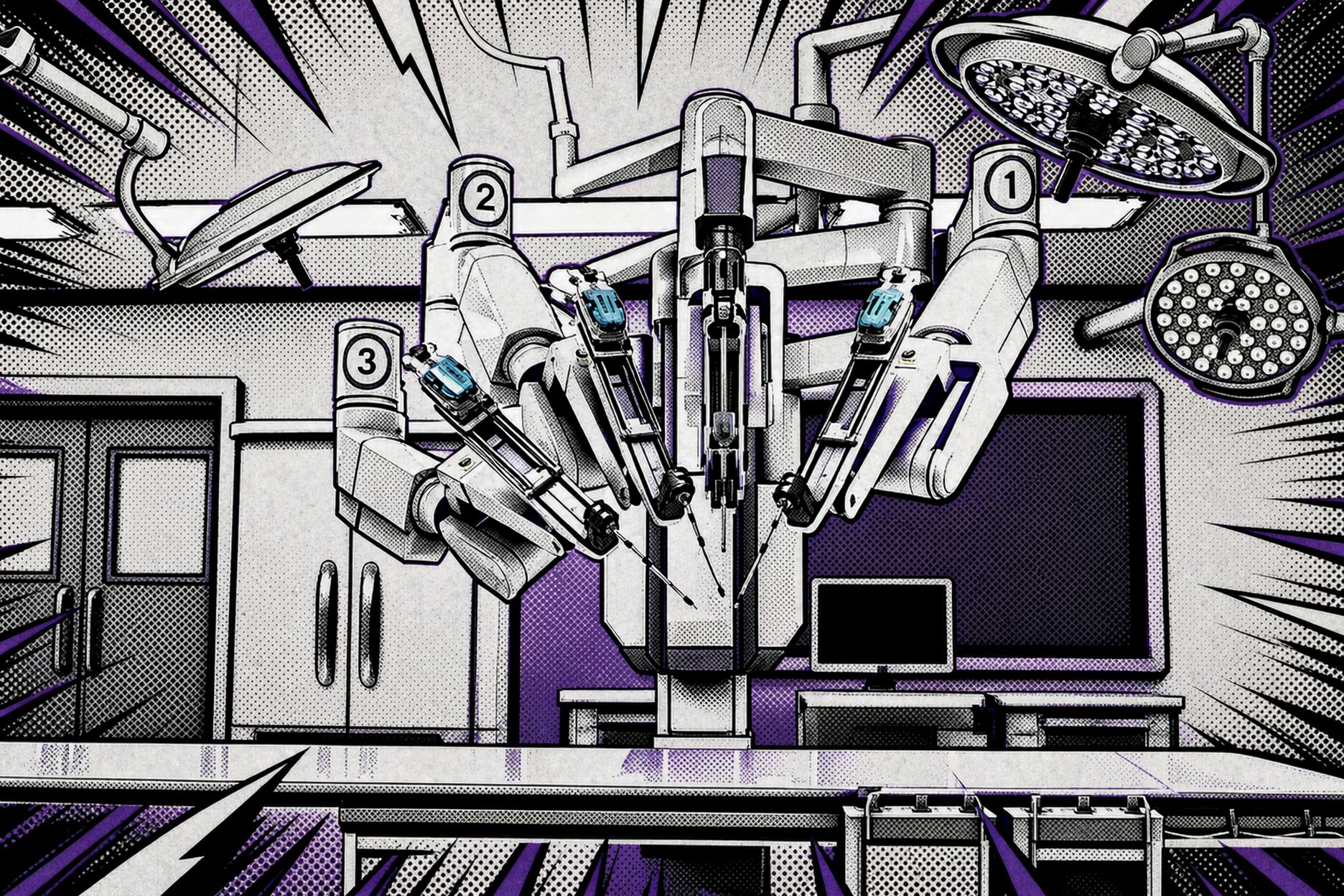
Liver transplantation has for decades meant a large bilateral subcostal incision. The surgeon stands at the table, removes the cirrhotic liver, and reconnects vessels and bile ducts of the new graft. Something is shifting now. Robots are entering this scene, but not as a brand-new trick. It is the final hard problem that robotic hepatobiliary surgery dared to touch after more than ten years of buildup.
真正在做受体侧机器人肝移植的,还不是遍地开花。首尔国立大学医院先把活体供肝切除和混合重建跑通。利雅得的 KFSHRC 后来撑起了目前最大的系列。华盛顿大学做了北美首例,还把死亡供体全肝也试了。里斯本、摩德纳这边把机器灌注接进来,死亡供体才算有了落地空间。
The centers actually doing robotic recipient liver transplantation are not everywhere. Seoul National University Hospital first stabilized robotic living-donor hepatectomy and mixed reconstruction. KFSHRC in Riyadh later carried the largest series. Washington University did the first North American case and tried deceased-donor whole-livers. Lisbon and Modena plugged in machine perfusion, which gave deceased-donor cases a real landing space.
这里有个挺现实的门槛。不是买了达芬奇就能开 rLT。几乎所有先驱团队都是先堆了几百台机器人肝切除、机器人供肝切除,才敢动受体。供肝切除的学习曲线拐点大概在 9 到 17 例,右半肝切除学习曲线约 15 例,熟练到手术时间明显下降要到 60 例上下。受体移植不是入门项目,是机器人肝胆项目的山顶。
There is a blunt threshold. Buying a da Vinci does not mean you can run rLT. Almost every pioneer team first stacked hundreds of robotic liver resections and donor hepatectomies before touching the recipient. The learning curve inflection for donor hepatectomy sits around 9 to 17 cases. The right hepatectomy learning curve is about 15 cases, and meaningful time reduction shows near 60. Recipient transplantation is not entry-level. It is the peak of a robotic HPB program.
手术台上最值钱的东西,不是「机器人更微创」这句口号。是腕式器械在肝门里的转角,放大视野下短肝静脉的处理,以及血管吻合时震颤过滤。传统腹腔镜肝切除中位失血大概 300 mL,机器人能压到 200 mL 上下,Pringle 阻断用得也更少。供肝切除里加上 ICG 胆道造影,单管移植物比例能从 38% 提到 49%,供受两边胆道并发症都往下走。
What actually pays off on the table is not the slogan that robots are less invasive. It is wristed instruments turning inside the porta hepatis, magnified views on short hepatic veins, and tremor filtering during vascular anastomosis. Laparoscopic liver resection often loses around 300 mL. Robotic cases sit nearer 200 mL, with less Pringle maneuver use. Adding ICG cholangiography in donor hepatectomy raises single-duct grafts from 38% to 49%, trimming biliary complications on both sides.
但受体侧和供体侧不是一回事。供肝切除出点血还能缝,受体这边是病肝、门脉高压、侧支血管、既往腹部手术瘢痕全堆在一起。机器人没了触觉反馈就成了真问题。意外出血时不能愣着,得先用机器人器械控住,再决定转开放。所以这个术式早期只敢放在高容量、有紧急转换预案的中心里跑。
But recipient side is not donor side. Donor hepatectomy can tolerate a bleed and a suture. The recipient brings cirrhotic tissue, portal hypertension, collaterals, and old surgical scars all at once. The lack of haptic feedback becomes a real problem. Unexpected bleeding cannot wait. You control it robotically first, then decide on conversion. That is why early rLT only lived inside high-volume centers with conversion protocols.
患者也不是谁来都做。MELD 分数低到中等,BMI 别太高,肚子别开过几次刀。门脉海绵样变和广泛侧支基本排除,再移植也大多不接。摩德纳做过选择性临床显著门脉高压,KFSHRC 把门脉血栓扩到 Yerdel I–II。看着是边界在松,实际更像是老团队在自家病例里试探,不是平台已经普适。
Patients are not taken indiscriminately. Low-to-moderate MELD, BMI not too high, few prior abdominal operations, no cavernous transformation, no broad collaterals, and re-transplant usually excluded. Modena tried selected clinically significant portal hypertension. KFSHRC extended to Yerdel I–II portal vein thrombosis. The boundary looks looser, but it is senior teams probing their own cases, not proof the platform is general-purpose.
死亡供体这事更吃机器灌注。冷缺血时间比活体长一截,机器人吻合再细也扛不住器官在冰上放太久。HOPE、双 HOPE、常温机器灌注现在基本成了死亡供体 rLT 的标配,用来缓冲热缺血和冷缺血。已有数据显示低温氧合灌注能把非吻合口胆道狭窄风险压下去一大截。这就是死亡供体能进机器人流程的底气。
Deceased-donor cases lean harder on machine perfusion. Cold ischemia runs longer than living-donor cases, and no matter how fine the robotic anastomosis is, the organ cannot sit on ice forever. HOPE, dual HOPE, and normothermic machine perfusion have basically become standard furniture in deceased-donor rLT, buffering warm and cold ischemia. Existing data show hypothermic oxygenated perfusion cuts non-anastomotic biliary stricture risk sharply. That is the actual reason deceased donors can enter robotic workflows.
现在对外讲的早期结果确实好看。汇总 70 例里中转开放不到 3%,失血量中位数不高,6 个月生存在个别系列里甚至 100%。但别被数字带跑。这 70 例里 77% 来自同一个中心,入选标准卡得很窄,随访大多 6 到 12 个月。出血 7%,胆道并发症 8.5%,肝动脉血栓 4.3%。样本小到置信区间都撑不开。
Early numbers do look good. Among 70 pooled cases, open conversion stayed under 3%, median blood loss was modest, and six-month survival hit 100% in one series. But do not let the numbers carry you. Seventy-seven percent of those 70 cases came from a single center, selection criteria were narrow, and follow-up was mostly 6 to 12 months. Bleeding 7%, biliary complications 8.5%, hepatic artery thrombosis 4.3%, with confidence intervals too wide to relax.
麻醉和排班才是医院层面真正的拦路点。气腹加反 Trendelenburg 会吃掉静脉回流,升压药用量往上抬,无肝期比开放更长,CO2 栓塞也得防。更麻烦的是同步活体移植。两个手术室,两台机器人,两组麻醉,供受同时开台。这不是医生想不想做,是手术室资源允不允许。
Anesthesia and scheduling are the real blockers at hospital level. Pneumoperitoneum plus reverse Trendelenburg eats venous return, vasopressor doses go up, the anhepatic phase stretches longer than open cases, and CO2 embolism has to be watched. The worse part is synchronous living-donor transplantation. Two operating rooms, two robots, two anesthesia teams, donor and recipient open at once. It is not whether surgeons want it. It is whether the OR resource allows it.
所以这篇综述落到的位置很克制。rLT 不是开放肝移植的替代品,也不是噱头。它现在是少数高容量中心的专家俱乐部技术。接下来要看多中心注册、长期移植物生存、培训路径和成本效果。不然永远停在「高度选择患者里短期不错」这条线上。
So the review lands in a restrained place. rLT is not a replacement for open liver transplantation, nor a gimmick. Right now it is a specialist-club technology inside a few high-volume centers. What comes next is multicenter registries, long-term graft survival, training pathways, and cost-effectiveness. Without those, it stays on the line of short-term success in highly selected patients.


