
每逢节日,给父母送什么礼物,总是许多子女认真思考的问题。但比起一份节日的惊喜,父母在平常日子里,更需要的或许是有人说说话、有人记得生活中的小事,以及一份恰到好处的陪伴。当科技开始走进家庭,陪伴是否也能有新的可能。2026年10月18日,心忆科技举办重阳主题直播,正式发布机器人情感陪伴大脑,并分享心忆康康的最新产品进展与未来半年研发规划。
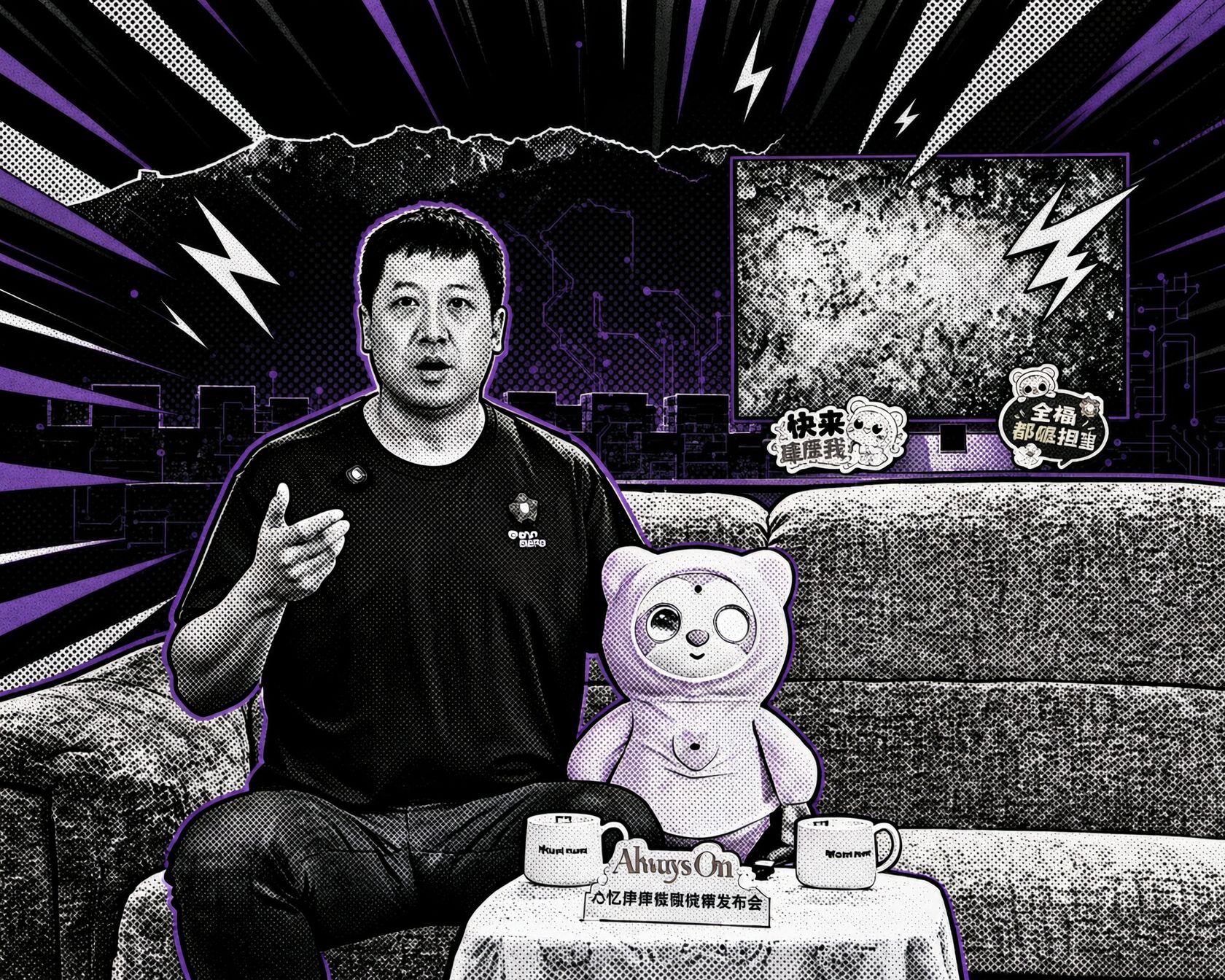
Every holiday, what gift to give parents is always a question many children carefully consider. But more than a holiday surprise, what parents need in ordinary days is perhaps someone to talk to, someone who remembers the small things in life, and just the right amount of companionship. When technology begins entering homes, can companionship have new possibilities. On October 18, 2026, Xinyi Technology held a Chongyang-themed livestream, officially releasing its robot emotional companion brain and sharing the latest product progress and next-half-year R&D plans for Xinyi KangKang.
心忆科技创始人兼CEO张凯从母亲希望子女多陪伴的真实经历谈起,分享了研发家庭陪伴机器人的初衷。对于很多家庭来说,关心并不缺少,难的是让关心跨越距离,持续融入日常。基于这样的思考,心忆科技发布机器人情感陪伴大脑,希望让机器人从被动回答问题,逐渐走向更自然、更有分寸的主动陪伴,让长辈的表达能够得到回应,也让家人的牵挂有更多传递方式。
Xinyi Technology founder and CEO Zhang Kai started from his mother's real experience of wanting more companionship from her children, sharing the original intention behind developing home companion robots. For many families, care is not lacking; the difficulty is letting care cross distance and continuously integrate into daily life. Based on this thinking, Xinyi Technology released its robot emotional companion brain, hoping robots can move from passively answering questions toward more natural, more measured proactive companionship, letting elders' expressions receive responses and family members' care have more ways to transmit.
心忆科技此次发布的情感大脑,以家庭多用户记忆、BSLA陪伴决策与具身行动为核心,探索让机器人拥有持续理解和自然互动的能力。在记忆层面,系统通过上下文记忆、意图记忆与长期记忆三个层次,既理解当下的对话,也在用户授权范围内逐渐积累生活偏好、过往经历和家庭关系线索。在陪伴决策层面,BSLA综合行为、情感线索与语言信息,协同判断什么时候应该回应、以怎样的方式回应。真正有温度的陪伴,不只是记住说过的话,更是懂得什么时候该开口,什么时候该倾听。
Xinyi Technology's released emotional brain centers on family multi-user memory, BSLA companion decision-making, and embodied action, exploring robots' capability for continuous understanding and natural interaction. On the memory level, the system uses three layers—contextual memory, intent memory, and long-term memory—understanding current dialogue while gradually accumulating life preferences, past experiences, and family relationship clues within user authorization. On the companion decision-making level, BSLA integrates behavioral, emotional cues, and language information to collaboratively judge when to respond and how. Truly warm companionship is not just remembering what was said but knowing when to speak and when to listen.
心忆科技CAIO王虎博士介绍了产品的升级方向。团队正在持续优化机器人的交流体验、主动陪伴的分寸感与运动稳定性,并通过感知、导航、避障和自动回充等能力的改进,让语言互动与身体行动更好地协同。这些改进最终指向的,是一个个具体的生活场景,在父母想聊天的时候有所回应,在需要提醒的时候及时出现,在日常起居中成为一个自然、熟悉的陪伴者。对家庭陪伴机器人而言,技术升级的意义,不仅在于增加多少功能,更在于能否让每一次相处变得更舒适。
Xinyi Technology CAIO Dr. Wang Hu introduced the product upgrade direction. The team is continuously optimizing the robot's communication experience, the measured sense of proactive companionship, and motion stability, and through improvements in perception, navigation, obstacle avoidance, and automatic recharging, letting language interaction and physical action better coordinate. These improvements ultimately point to specific life scenarios—responding when parents want to chat, appearing timely when reminders are needed, becoming a natural, familiar companion in daily life. For home companion robots, the meaning of technology upgrades lies not in how many functions are added but in whether every interaction becomes more comfortable.
心忆科技将认知症家庭与照护者的真实需求带入讨论,探索家庭陪伴机器人在特殊照护场景中的可能性。爱米粒认知症家属互助会创立人林曙颖分享了照顾母亲及组织家属互助活动的经历。她谈到,除了日常提醒和陪聊等支持,产品的使用便利性、触感和情绪回应同样重要。心忆科技情感计算架构师周红桂博士则从技术与伦理角度,强调尊重长辈的意愿与隐私。对于全天候看护、家务协助、声音克隆等需求,仍需要充分考虑技术成熟度、安全性及长期影响。科技可以帮助分担部分日常事务,但不应取代家人与家人之间的真实联系。
Xinyi Technology brought the real needs of dementia families and caregivers into the discussion, exploring home companion robots' possibilities in special care scenarios. Lin Shuying, founder of the Amyloid Dementia Family Mutual Aid Association, shared her experience caring for her mother and organizing family mutual aid activities. She said that beyond daily reminders and chat support, product usability, touch, and emotional response are equally important. Xinyi Technology affective computing architect Dr. Zhou Honggui emphasized respecting elders' wishes and privacy from technical and ethical angles. For needs including round-the-clock care, housework assistance, and voice cloning, technology maturity, safety, and long-term impact must still be fully considered. Technology can help share some daily affairs but should not replace real connections between family members.
在银发经济专题对谈中,中欧国际工商学院市场营销学副教授张玲玲教授与心忆科技VP张恺共同探讨了银发人群在不同人生阶段的成长、社交及照护需求,以及人生经历、个人经验和家庭记忆所具有的独特价值。老年人的需求并不是单一的。除了生活上的便利,他们同样需要交流、被倾听、分享经历,以及持续感受到自己与家庭、社会之间的联系。这也为子女选择礼物提供了一个新的思路,一份真正贴心的礼物,不仅要让父母在收到时开心,更要能够在节日过后,继续为他们的生活带来价值。
In the silver economy themed dialogue, CEIBS Associate Professor of Marketing and Associate Dean Zhang Lingling and Xinyi Technology VP Zhang Kai jointly explored silver-haired populations' growth, social, and care needs at different life stages, and the unique value of life experiences, personal experience, and family memories. Elderly needs are not singular. Beyond life convenience, they also need communication, being heard, sharing experiences, and continuously feeling connected to family and society. This also provides a new idea for children choosing gifts—a truly thoughtful gift should not only make parents happy upon receipt but continue bringing value to their lives after the holiday.
心忆科技未来半年的研发将围绕家庭陪伴决策引擎与灵动系统两条路径继续深化。一方面,团队计划进一步融合用户身份、情感线索与家庭关系图谱,提升机器人对家庭成员及相处情境的理解能力,另一方面,将继续探索暗光环境下自主回充、家庭布局变化后的地图更新、狭窄空间路径规划与脱困等能力,让机器人更好地适应真实家庭环境。在内容与服务生态方面,团队还计划探索相声、戏曲以及家庭服务预约等合作,为陪伴体验创造更多可能。
Xinyi Technology's next-half-year R&D will deepen along two paths—family companion decision engine and agile system. On one hand, the team plans to further integrate user identity, emotional cues, and family relationship graphs to improve robots' understanding of family members and interaction contexts; on the other, it will continue exploring autonomous recharging in low-light environments, map updates after home layout changes, narrow-space path planning and escape, letting robots better adapt to real home environments. On content and service ecosystem, the team also plans to explore crosstalk, opera, and family service appointment cooperation to create more possibilities for companion experiences.
心忆科技这个案例,和前面讨论的米果智能migo、欧拉万象、优必选U1系列是同一个赛道的不同样本。前面讨论过米果智能的migo选择情感陪伴这个更窄的方向,也讨论过欧拉万象从家庭场景切入、目标是让机器人在真实生活中持续学习,还讨论过优必选U1系列聚焦家庭陪伴、面部可呈现30余种微表情。心忆科技的差异点在于,它把情感大脑拆成了记忆、决策、行动三层,记忆层负责积累生活偏好和家庭关系线索,决策层负责判断什么时候该回应、怎么回应,行动层负责把语言互动和身体动作协同起来。这个拆法和前面讨论的格物通智理解物理变化、当虹科技的感知理解决策三层、跨维智能的UNITAS用三维空间统一表示,是同一个方法论的不同应用。区别在于,别人拆的是机器人怎么理解物理世界,心忆科技拆的是机器人怎么理解一个家庭。
Xinyi Technology's case is a different sample in the same track as the previously discussed Miguo Intelligent migo, Ola Universe, and UBTECH U1 series. Earlier we discussed Miguo Intelligent's migo choosing the narrower direction of emotional companionship, Ola Universe entering from home scenarios aiming to let robots continuously learn in real life, and UBTECH U1 series focusing on home companionship with faces displaying over 30 micro-expressions. Xinyi Technology's differentiation lies in dividing the emotional brain into three layers—memory, decision, and action. The memory layer accumulates life preferences and family relationship clues; the decision layer judges when to respond and how; the action layer coordinates language interaction and physical movement. This division follows the same methodology as the previously discussed Gewu Tongzhi understanding physical changes, Wanghong Technology's perception-understanding-decision three layers, and DexForce UNITAS using 3D space as unified representation. The difference is others divide how robots understand the physical world; Xinyi Technology divides how robots understand a family.