
在一间采数据的工作室里,一名采集员戴好头盔,把手伸进一副布满传感器的手套里。他叠一件衣服、拉开抽屉、把杯子放回桌面,动作稀松平常,可就在这几秒里,他的手部位置、姿态、用力大小被一件件记了下来,连指尖接触物体时那点细微的触感都没有放过。这不是科幻片,而是具身智能产业链上,正在变得越来越稀缺的一门手艺。10月20日,企查查的工商变更信息显示,乙太具身科技(北京)有限公司新增两家重量级股东,智元机器人关联公司智元创新(上海)科技股份有限公司,以及华为旗下的深圳哈勃科技投资合伙企业(有限合伙),公司注册资本也从100万元增至约127万元。
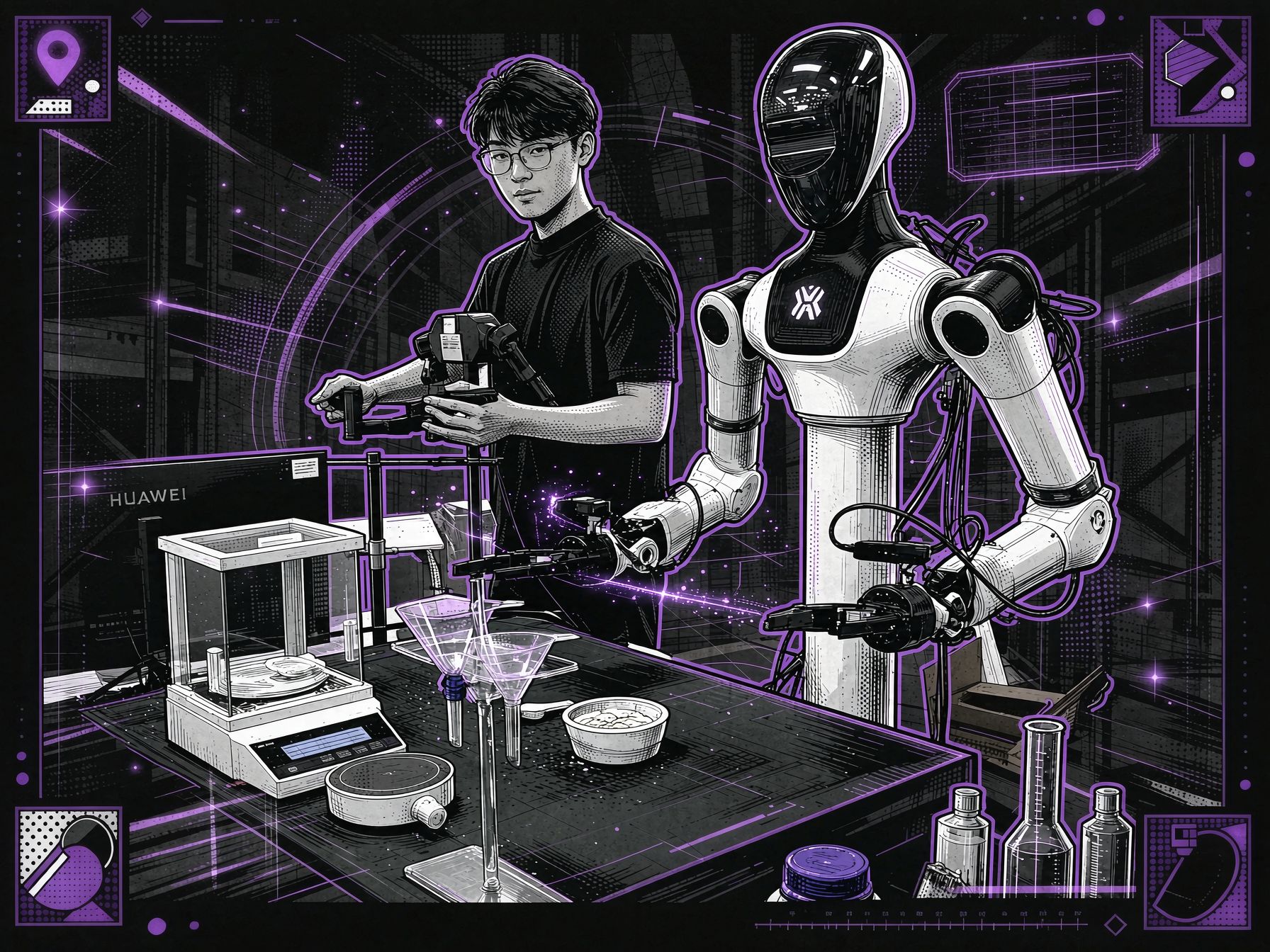
In a data collection studio, a collector puts on a headset and slips his hands into sensor-covered gloves. He folds a piece of clothing, opens a drawer, puts a cup back on the desk—ordinary movements, but in those few seconds, his hand position, posture, and force are recorded one by one, even the subtle tactile sensation when fingertips touch objects is not missed. This is not science fiction but an increasingly scarce craft in the embodied intelligence supply chain. On October 20, Qichacha business registration change information showed Yitai Embodied Technology (Beijing) Co., Ltd. added two heavyweight shareholders—AgiBot Innovation (Shanghai) Technology Co., Ltd., an affiliate of AgiBot, and Shenzhen Hubble Technology Investment Partnership (Limited Partnership) under Huawei; registered capital also increased from 1 million yuan to about 1.27 million yuan.
这家去年12月才注册的公司,十个月里一口气完成四轮融资,累计金额超过亿元,背后既有智元、华为哈勃、自变量这样的产业资本,也有深高新投、上海半导体产投这些国资,以及高瓴创投、曦晨资本、瀚辉资本等财务资本。外界或许会问,一家专门做数据采集的公司,凭什么让智元、华为同时出手。答案藏在具身智能眼下最真实的困境里。人形机器人的算法一日千里,真正拖住进度条的反而是一双手。一只工业级灵巧手单价三四万元,真机摔一次就是一只手的成本,想让机器人学会叠衣服、拧螺丝,靠真机一台一台去磕数据,又贵又慢。
Jushen Yongxian calculated that this company, registered only last December, completed four funding rounds in ten months, with cumulative amounts exceeding 100 million yuan. Backers include industrial capital like AgiBot, Huawei Hubble, and AgiBot, state capital including Shenzhen High-tech Investment and Shanghai Semiconductor Industry Investment, and financial capital including Hillhouse Ventures, Xichen Capital, and Hanhui Capital. Outsiders may ask: why would a company specializing in data collection get AgiBot and Huawei to act simultaneously. The answer lies in embodied intelligence's most real current predicament. Humanoid robot algorithms advance rapidly, but what truly slows the progress bar is a pair of hands. An industrial-grade dexterous hand costs 30,000 to 40,000 yuan each; dropping a real machine once costs one hand. Teaching robots to fold clothes and tighten screws by grinding data machine by machine is expensive and slow.
这个缺口让给机器人造数据成了一门好生意。光轮智能今年估值突破20亿美元,成为全球首个具身数据独角兽,智元系孵化的一站式数据平台觅蜂科技,半年连融三轮,还战略投资了VR头显厂商小派科技去建数据底座。本体厂商纷纷回头给上游的数据公司投钱,大家抢的不再是一纸股权,而是下一代训练标准由谁说了算。乙太具身能同时被产业资本看中,靠的正是把无本体采集这条最难的路走通了。它不依赖机器人真机,采集员戴上自研的头盔和触觉手套就能开工,一副手套能捕捉42个全手自由度和274个全掌力觉点位,一次输出视觉、位姿、力觉、触觉等13种模态的数据。比起多数只能在室内搭棚采集的同行,乙太具身靠软硬件同步优化,把采集场景搬到了室外,数据的丰富度因此不一样。
This gap has made "creating data for robots" a good business. Guanglun Intelligent's valuation exceeded $2 billion this year, becoming the world's first embodied data unicorn; Mifeng Technology, a one-stop data platform incubated by AgiBot, raised three rounds in half a year and strategically invested in VR headset maker Pimax to build a data foundation. Body manufacturers are turning back to invest in upstream data companies; what everyone is grabbing is no longer equity but who gets to define the next-generation training standard. Yitai Embodied being simultaneously recognized by industrial capital relies precisely on walking through the hardest path—bodyless collection. It does not depend on real robots; collectors wear self-developed headsets and tactile gloves and can start working. One pair of gloves can capture 42 full-hand degrees of freedom and 274 full-palm force sensing points, outputting 13 modalities of data including vision, pose, force, and touch at once. Compared with peers who can only collect indoors in temporary setups, Yitai Embodied, through synchronized software-hardware optimization, moved collection scenarios outdoors, making data richness different.
采集、清洗、标注在自家系统里并行完成,交到厂商手里的数据包拿来就能训练,还能跨本体迁移。有多位投过它的投资人私下评价,其数据质量和精度甚至好过一些规模更大的同行。也正因为数据能打,一家估值超过200亿元的本体厂商,已经跟它签下了首批两万小时的订单。这支队伍的另一半,来自一个跟机器人看似八竿子打不着的行业。创始人杨叶青做过HTC VIVE中国区元宇宙事业部兼软件及服务负责人,联合创始人兼CTO岳阳曾任HTC VIVE Studio技术负责人,两人在HTC共事五年。这份VR履历不是巧合,在虚拟世界里摸爬滚打多年的人,对感官怎么被还原、动作怎么被记录有一种天生的敏感。而这恰好撞上了行业从Ego视觉走向力觉、触觉的拐点,当第一视角相机和腕部相机都成了标配,高精度触觉手套正被越来越多的厂商当成数采设备的刚需。
Collection, cleaning, and annotation are completed in parallel within their own system; data packages delivered to manufacturers can be used for training directly and can transfer across bodies. Multiple investors who have backed it privately commented that its data quality and precision even exceed some larger peers. Precisely because the data is strong, a body manufacturer valued at over 20 billion yuan has already signed a first batch of 20,000-hour orders with it. The other half of this team comes from an industry that seems completely unrelated to robots. Founder Yang Yeqing served as HTC VIVE China元宇宙 business unit and software and services head; co-founder and CTO Yue Yang served as HTC VIVE Studio technical lead; the two worked together at HTC for five years. This VR resume is not a coincidence—people who have struggled in virtual worlds for years have an innate sensitivity to how senses are restored and how actions are recorded. And this happens to collide with the industry's inflection point from Ego vision to force sensing and touch; as first-person cameras and wrist cameras become standard, high-precision tactile gloves are being treated by more and more manufacturers as a rigid demand for data collection equipment.
这则融资新闻真正动人的地方,是它描出了具身智能一次安静的转身。数据正在从原材料变成行业标准,谁能用更低成本稳定供给高精度、可跨本体迁移的数据,谁就握住了定义训练口径的钥匙,乙太具身这类公司的估值逻辑因此被整个重估。本体厂商、产业CVC、国资、财务资本在同一张股东表上同席,意味着这条赛道告别了单点造车,走进基础设施化和精细分工,数据公司从边角料变成了枢纽。放到更长远的坐标里看,数据底座能不能自主可控,将直接决定中国下一代人形机器人在全球竞赛中能站多稳,而卖铲人的集体崛起,恰恰是这场竞赛里最容易被低估的一手棋。
What is truly moving about this funding news is that it sketches an embodied intelligence quiet turn. Data is transforming from raw material into industry standard; whoever can stably supply high-precision, cross-body-transferable data at lower cost holds the key to defining training specifications, and the valuation logic of companies like Yitai Embodied is therefore entirely repriced. Body manufacturers, industrial CVCs, state capital, and financial capital sitting at the same shareholder table means this track has bid farewell to single-point car-making and entered infrastructure-ization and refined division of labor; data companies have moved from sidelines to hubs. In a longer-term coordinate, whether the data foundation can be independently controllable will directly determine how steadily China's next-generation humanoid robots can stand in the global competition, and the collective rise of "shovel sellers" is precisely the most easily underestimated move in this competition.
这个案例和前面讨论的天奇股份2万小时工业数据、北京人形数据与训练基地、国网天津电力的机器人学校、觅蜂派的众包数据采集是同一个赛道的不同样本。前面讨论过,真实工业场景正在成为具身智能落地的基础设施,拥有场景的企业正在把场景优势转化为数据优势。也讨论过机器人数据采集员的工作状态,机器人要真正像人一样无须调试、适应各种环境,还需要三到五年。乙太具身的差异点在于,它把数据采集本身做成了一门标准化生意,不依赖机器人真机,用自研的头盔和触觉手套采集,数据包拿来就能训练,还能跨本体迁移。这条路能不能走通,取决于两件事,一是两万小时订单能不能持续转化为复购,二是这些数据训练出来的模型能不能在真实产线上稳定作业。前面讨论过机器人行业当前的核心矛盾,不是能不能做出来,而是能不能稳定用、能不能规模化、能不能赚钱。乙太具身这四轮融资,是回答第一个问题的原材料,但第二个和第三个问题,还需要客户订单和实际交付来验证。
This case is a different sample in the same track as the previously discussed Tianqi Shares' 20,000 hours of industrial data, Beijing Humanoid Data and Training Base, State Grid Tianjin Electric Power's robot school, and Mifeng Pai's crowdsourced data collection. Earlier we discussed that real industrial scenarios are becoming infrastructure for embodied intelligence deployment, and enterprises owning scenarios are converting scenario advantages into data advantages. We also discussed robot data collectors' working conditions—for robots to truly operate without debugging and adapt to various environments like humans, another three to five years are needed. Yitai Embodied's differentiation lies in making data collection itself a standardized business, not relying on real robots, using self-developed headsets and tactile gloves for collection, with data packages usable for training directly and transferable across bodies. Whether this path works depends on two things—whether the 20,000-hour orders can continuously convert into repeat purchases, and whether models trained on this data can operate stably on real production lines. Earlier we discussed the robot industry's current core contradiction—not whether it can be made but whether it can be stably used, scaled, and profitable. Yitai Embodied's four funding rounds are raw material for answering the first question, but the second and third questions still need customer orders and actual delivery to verify.