
DeskOfficer公司今天发布了Charlie的全息版本,这是它面向政府前台的AI数字员工。从今天起,警察局和治安官办公室可以采购这个新版本,它将在奥兰多举行的国际警察局长协会年会上首次亮相。Charlie是DeskOfficer的第一款人形机器人,2025年在丹佛的IACP展会上,它曾在展厅里走动、握手、和人自拍,把过道堵得水泄不通。警察局长们掏出手机拍照,参展商离开自己的展位过来看热闹。今年,Charlie换了一种形态回来,一个可以放在大厅里工作的全息投影。它由DeskOfficer平台驱动,这个平台已经在为公共安全机构处理非紧急和行政电话,现在它把同样的服务带到了居民面前。
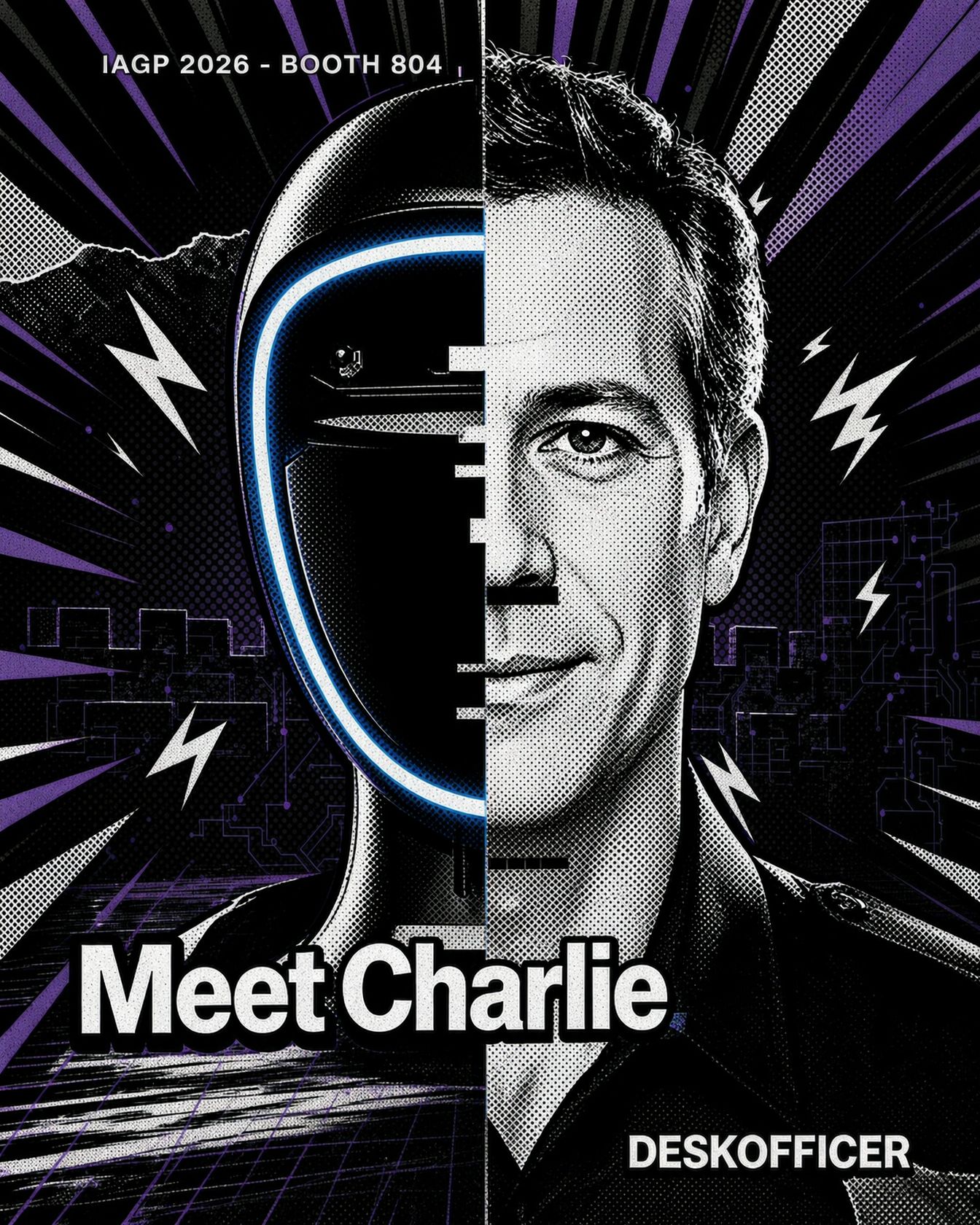
DeskOfficer today launched a life-size holographic version of Charlie, its AI digital employee for government front desks. Available to police departments and sheriffs' offices starting today, the new Charlie will debut at the International Association of Chiefs of Police Annual Conference in Orlando. Charlie, DeskOfficer's first humanoid robot, strolled the exhibit hall at IACP 2025 in Denver, shaking hands, posing for selfies, and turning aisles into traffic jams. Chiefs pulled out their phones; vendors left their booths for a closer look. This year, Charlie returns in a new form—a life-size hologram agencies can put to work in their own lobbies. Powered by the DeskOfficer platform already handling non-emergency and administrative calls for public safety agencies, he brings that same service face to face with residents.
DeskOfficer CEO Kushyar Kasraie说,Charlie去年在IACP上给人留下了深刻印象,我们想在此基础上继续发展。他的新形态让机构可以把他放在居民本来就会去的地方,这样人们可以走过去,用自己熟悉的语言说话,在任何时间得到帮助。Charlie在机构设定的规则下处理常规的非紧急询问,需要人工介入时转给工作人员。遇到紧急情况,Charlie会引导居民拨打911。具体来说,它可以24小时在岗,机构可以把Charlie放在大厅或车站入口,在人工柜台关闭后继续帮助居民。它支持90多种语言的自然对话,居民可以用自己的语言提问,不需要在菜单里找选项。它连接机构系统,调用机构自己的信息和系统来回答居民,把请求转给正确的人。除了大厅,DeskOfficer平台还支持电话、网页聊天、短信和电子邮件。
DeskOfficer CEO Kushyar Kasraie said Charlie made a real impression at IACP last year, and "we wanted to build on that. His new form lets agencies put him where residents already go, so they can walk up, speak in their language and get help at any hour. Come by and say hello. He'll answer." Charlie handles routine, non-emergency inquiries under rules each agency sets, with staff brought in when a request needs their attention. For emergencies, Charlie directs residents to call 911. Specifically, it can be in person around the clock—agencies can put Charlie in a lobby or station entrance to help residents after the staffed counter closes. It supports natural conversation in more than 90 languages; residents can speak in their own language and ask follow-up questions without navigating menus. It connects to agency systems, drawing on the agency's own information and systems to answer residents and route requests to the right person. Beyond the lobby, the DeskOfficer platform also supports phone calls, web chat, text, and email.
这个案例值得单独看,因为它和前面讨论的具身智能落地路径走了一条不同的方向。前面讨论过优必选、宇树、智元这些人形机器人公司,它们的逻辑是把机器人造得越来越像人,能走、能抓、能干体力活。DeskOfficer的逻辑相反,它一开始做人形机器人,但最后选择放弃实体形态,改成全息投影。这个转变说明,在政府前台这个具体场景里,实体机器人的优势不明显,而全息投影有它自己的好处。人形机器人要移动、要维护、要充电、要处理机械故障,全息投影没有这些问题,它可以24小时不间断工作,成本更低,维护更简单。当然,全息投影也失去了实体机器人的一些能力,比如它不能搬东西、不能带路、不能做物理操作。但在前台问询这个场景里,这些能力本来就不是刚需,核心需求是听懂居民的问题、用居民的语言回答、把请求转给正确的人。
This case deserves separate attention because it takes a different direction from the embodied intelligence deployment paths discussed earlier. Earlier we discussed UBTECH, Unitree, and AgiBot—humanoid robot companies whose logic is making robots increasingly human-like, able to walk, grasp, and do physical labor. DeskOfficer's logic is the opposite—it started with a humanoid robot but ultimately chose to abandon the physical form for a holographic projection. This shift indicates that in the specific government front desk scenario, physical robots' advantages are not obvious, while holograms have their own benefits. Humanoid robots must move, be maintained, be charged, and handle mechanical failures; holograms have none of these problems—they can work 24/7 continuously, with lower cost and simpler maintenance. Of course, holograms also lose some physical robot capabilities—they cannot carry things, guide people, or perform physical operations. But in the front desk inquiry scenario, these capabilities were never rigid requirements; the core need is understanding residents' questions, answering in their language, and routing requests to the right person.
这个案例和前面讨论的FDE逻辑也有呼应。前面讨论过具身智能卖的不是机器人,是一个永远调不完的适配,落地的最后一公里靠的是第三方FDE交付团队。DeskOfficer走的不是第三方交付,而是自己把平台和场景绑在一起。它的平台已经在处理公共安全机构的非紧急电话,现在把同样的服务从电话延伸到大厅里的全息投影。这个路径的特点是,先有平台和服务能力,再选择最合适的形态去承载。人形机器人是一种形态,全息投影是另一种形态,选择哪种形态取决于场景需求,而不是技术本身有多先进。这个判断和前面讨论的“适合场景的手,才是好手”是同一个逻辑。
This case also echoes the FDE logic discussed earlier. Earlier we discussed that embodied intelligence sells not a robot but an adaptation that never finishes tuning; the last mile of deployment relies on third-party FDE delivery teams. DeskOfficer does not take third-party delivery but binds its platform and scenario together itself. Its platform already handles non-emergency calls for public safety agencies; now it extends the same service from phones to lobby holograms. This path's characteristic is having platform and service capabilities first, then choosing the most suitable form to carry them. Humanoid robots are one form, holograms another; which form to choose depends on scenario needs, not on how advanced the technology itself is. This judgment follows the same logic as the previously discussed “the hand that suits the scenario is the good hand.”